Book Review: Count Your Lucky Stars by Alexandria Bellefleur
Tuesday, February 15, 2022
Friday, February 11, 2022
Dorothy Daniels is a food critic. Not just any, mind you: one of the best of the best. A master at describing culinary delights and winning over the minds of intellectual foodies, Dorothy loves her job. Her other passion? Men, in any and every form. Spending her time between New York and Italy, passionately eating at the best restaurants and seducing men, Dorothy is just like anyone else. Aside from the fact that she is bitingly clever and independent, of course -- and happens to be a cannibal.
I'd been looking forward to reading this, seeing as I adore unlikable female protagonists and what some might categorize as "nasty" literature. I don't mind grotesquery, as long as it's cleverly done and serving some sort of narrative purpose. Summers excels at this sort of quasi-pretension, rife with vulgarity, and her writing can't be described as anything but decadent and beautiful. Many people will probably be put off by the frank, semi-disgusting descriptions of sex and murder, but for me, the combination of the elegant and the repulsive worked wonderfully.
Dorothy, our antiheroine, is not likable. Period. There's no ifs, ands or buts about it, and I applaud Summers for both making her an interesting, readable narrator, but also not falling into the trap of trying to make her sympathetic or relatable. In spite of the fact that she's an unrepentant murderer, cannibal and generally bad person, it's both a little frightening and strangely fun to be trapped inside her head for the duration of this narrative.
The story is told in a disjointed fashion, going from flashbacks of her murders (as well as affording us some small pictures of her adolescence and childhood) to the present day. Although some people dislike books told in a nonlinear fashion, I don't mind it, and I actually felt that it helped us to get an idea of what it might be like in Dorothy's head as she reminisces. All other characters are purposely rendered in a somewhat one-dimensional way, telling us that Dorothy sees them as little more than objects, dolls to move around in her own personal playhouse. The one person she actually seems to love and view as another being on her level is her best friend, Emma, who is actually painted quite vividly; she could make for an interesting narrator in her own book.
So, by now you're probably wondering... why only three stars, then? Well, to put it simply, there were some things that left a bad taste in my mouth (pun not intended). Yes, Dorothy is a psychopath, a cannibal, and a murderer -- she is not intended as a moral compass by any stretch of the imagination. But during the course of the tale, Dorothy ends up meeting Kiandra Wasserman, a black woman and police detective. Their meetings felt oddly racialized to me, particularly because every time Dorothy encounters her, she compares Kiandra to animals (most often ponies, but regardless, it didn't strike me quite right). To be fair, she often describes other characters in unflattering, often animalistic or food-adjacent terms, but with Wasserman's character, it is essentially every single time.
Summers also has Dorothy describe Kiandra with a word that is outdated, offensive, and frankly baffled me. I hate to repeat the term here, but I don't want anyone to make assumptions about what it might be, so I'll put it here: J*wess. I believe that Summers has a Jewish father, so I feel it's only fair to include that information, but as I'm not Jewish I'm not sure how much of a difference it makes. She also seems fixated on Kiandra's dreadlocks, and the descriptions of them sometimes struck me as strange and unpleasant.
I understand that, perhaps, this is Summers giving us a taste of Dorothy's own biases, but it strikes me as odd, because in other parts of the narrative Dorothy tells us she's aware of her privileges as a white woman (although just because one is aware of those privileges does not mean you don't use them for your benefit, or still hold implicit biases anyways). She also says some slightly cruel things about other women and womanhood, but I think that's fair game, considering she herself is a woman.
All in all, I can't exactly recommend it in good faith because of those elements that left me feeling a bit uneasy. I welcome thoughts and further discussion on these issues!
Tuesday, February 8, 2022
Content Warning: violence, murder, death, misogyny, (slight) internalized homophobia, emotional abuse.
Xiang dreams of life beyond the shores of her tiny fishing village. Finally managing to convince her cold, powerful mother to take her to Canton, where she can learn to run one of the family teahouses, she's excited by the opportunity not only for more freedom, but the chance to show her mother what she's capable of. When Xiang meets a troublemaking girl named Anh, who steals the only memento Xiang has of her father, they inadvertently stumble upon something shocking: a treasure map, locked in Xiang's pendant. And not just any treasure map -- but the clues to find the fabled, notorious Dragon Fleet's legendary riches. But things are not always as they seem...
Let me admit something upfront: I've never actually read Treasure Island. I know the beats of the story, of course, but most of my familiarity with the tale comes from two other retellings -- Treasure Planet, the charming Disney film, and Black Sails, which tells the (somewhat humble) beginnings of Captain Flint, Long John Silver, and many other characters from Louis Stevenson's original. So, I can't say much about that aspect of A Clash of Steel; I kept in mind that it was intended as a sort of riff on that book, but I primarily treated it as its own fresh story.
It only took me a few chapters to realize that this was perhaps not the book for me, but I very, very rarely quit reading a book once I've started it, so I decided to keep pushing forward. Besides, I sometimes find myself warming to a story even if I didn't quite like it in the beginning, so I had hopes that that might be the case here. Sadly, though, it wasn't: for me, this felt like a pain to get through. Probably the main issue is that I just didn't like the writing, which struck me as painfully juvenile; yes, I know that this is YA, but the current style that permeates the genre always strikes me as feeling amateurish. Told in first-person, present-tense (not my favorite at the best of times, to be fair), I'm not exaggerating when I tell you that so many paragraphs begin with "I" that it was giving me a headache.
The worldbuilding is vague. This book is categorized as fantasy, I suppose because it's kind of alternate historical fiction, but aside from that, I can't really tell you what the so-called "fantasy" elements were. Do pirates and hidden treasure automatically qualify a book for the fantasy genre? I'm not sure, so I'll have to get back to you on that one. The images that Lee is able to conjure with her descriptions are beautiful, however. The only problem is that there is too much detail -- the plot ends up dragging because of it.
I liked Xiang well enough, but I'm not sure I ever really became emotionally attached to her. I liked her love interest, Anh, a little better; she's spunky, a little prickly, and ambitious. The rest of the characters never felt fully developed or realized, and even though Xiang tells us time and time again how bonded she ends up becoming with the ragtag crew she joins up with (not a spoiler, as it's in the synopsis!), I never really saw any evidence of that with my own eyes. Sure, she told us, but as far as scenes that show us these friendships, they scarcely exist at all. It was actually similar to her relationship with Anh on that score, too. Although she does spend more time with Anh than any of the others, and there is a touch more development between them, there's still a lot of telling us that Anh did this, said this, likes or dislikes this, etc. without ever putting those interactions down on-page.
The plot itself doesn't really kick into high-gear until around 70%, and the pacing is extremely slow. I don't mind a book that takes its time, but it was disappointing that the fun, somewhat emotionally charged action scenes don't happen until the very end. I wanted to root for Xiang and Anh and the rest, but everything was just a little too shallow for me to ever become fully invested. I also couldn't get over how conveniently they find everything, how easily their obstacles are overcome, and that they decipher the map basically within seconds, even though they don't actually take their time to ponder it until they're on the island hiding the treasure!
Now, with all of that being said, I think I would have probably loved this if I'd read it when I was sixteen. Teenagers will probably adore this, and I did love the fun ideas at work here (I've been a bit pirate-obsessed since childhood), with the added bonus of a diverse cast and fascinating Vietnamese and Chinese culture woven into the story. It didn't work for me, but tons of people loved this story, and I don't want you to not read it based simply off my review -- for many young people of Vietnamese and/or Chinese descent, this story will probably have a depth and meaning that I simply can't understand.
I do want to add one last note: the author includes a beautiful note at the end of the book which tells us a bit about how she ended up deciding to write this, and her family's story of immigration. I loved that her family's own history inspired her to craft this story, and regardless of how I ended up feeling about this book, there's a wonderful meaning behind it.
Thursday, February 3, 2022
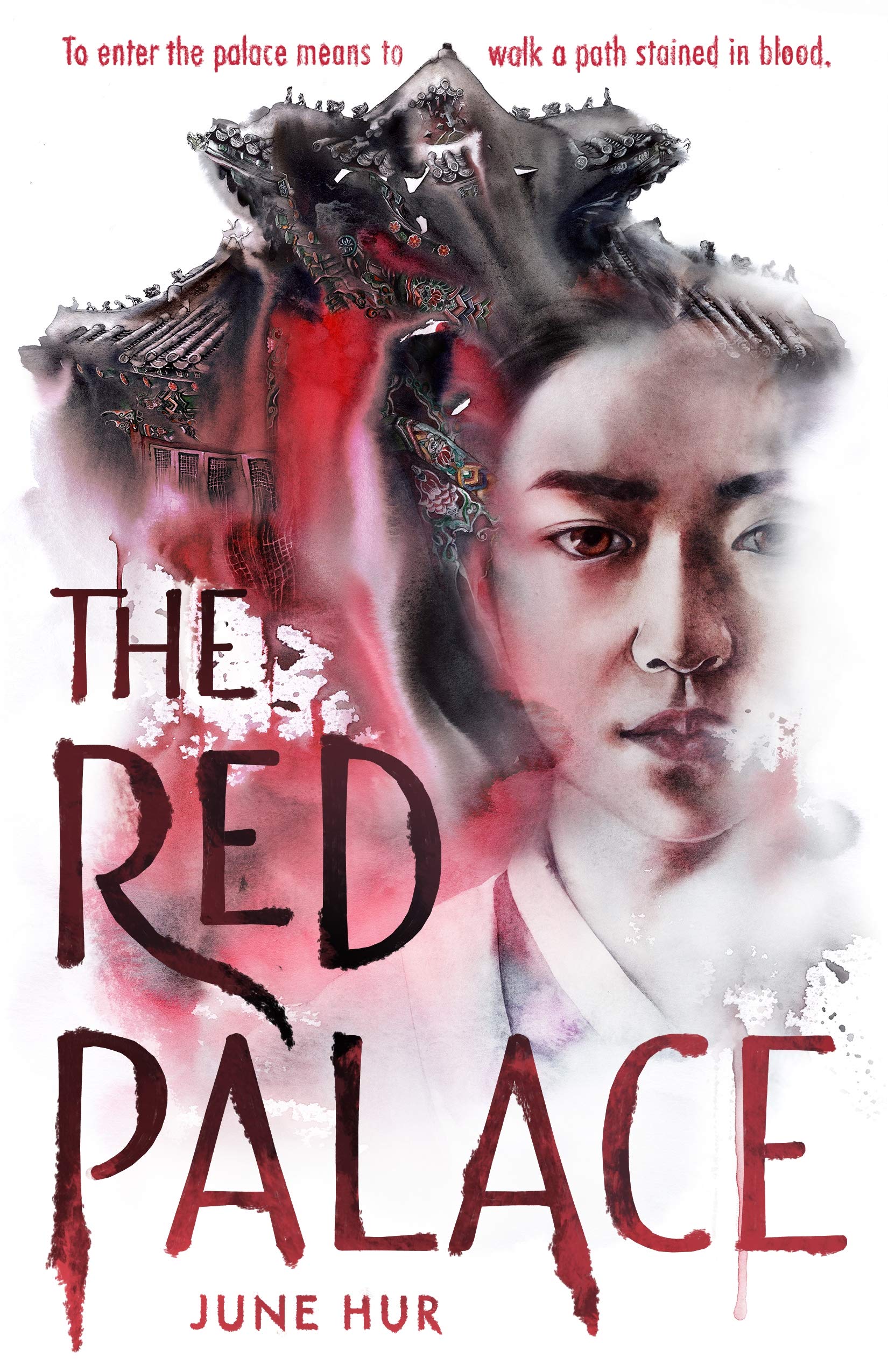
In 1758, Hyeon has achieved her life's dream of working as a palace nurse. In spite of the fact that she's illegitimate, and a "vulgar commoner," Hyeon plans to make her future a bright one. When four women are massacred at the Hyeminseo, where she received her education as a nurse, her mentor Jeongsu is arrested for the crime -- and Hyeon, determined to save her, finds herself deep in the mire of deadly court politics. With the help of a young police inspector, Eojin, and the rumors circulating that suggest the Crown Prince himself may be responsible, Hyeon will stop at nothing to uncover the truth.
What sets June Hur apart from the crowd, for me, is not merely her ability to transport you back into the historical period she's covering, but also the fact that she dares to write something that is not your "typical" historical fiction or mystery. I can't tell you how much I tire of reading the same overused mystery tropes -- I used to absolutely love domestic thrillers, but they've become so dime-a-dozen I can barely bring myself to be excited for them anymore. Instead, in The Red Palace (as well as in Hur's other works) we are allowed to explore a period and place rarely seen in English-language fiction, and it's nothing short of a marvel.
The accuracy and detail that Hur inserts into all of her works shines brightly here; as we journey through the Joseon kingdom and palace with Hyeon, we learn a bit about her daily tasks in the palace as well as her extensive medical knowledge. I loved the descriptions of clothing, the palace courtyards and pavilions, the discussion of the caste system, and so much more. It goes beyond a mere mystery with its insight into historical life.
Our heroine, Hyeon, who is the bastard daughter of a highly-ranked man who sees her as little more than an annoyance, is intelligent, compassionate, and often cool-headed. She's extremely stubborn -- which lends itself easily to her dedication in finding out the truth, no matter the cost -- and although she does begin to find herself growing closer and closer to Eojin, the police inspector, she never strays from the path she's set for herself. Many romances in young adult books leave me rolling my eyes, as they seem to take something away from the main story or plotline, but in this case, I was pleasantly surprised to find myself rooting for Eojin and Hyeon both separately and as a future couple.
The mystery itself actually kept me on my toes, although by the end, I kept thinking I should've seen it coming! I enjoyed that Hur provides a nice number of suspects, each seemingly with their own motives and histories, and keeps us guessing throughout the entirety of the novel. The only other novel I've read of Hur's is The Forest of Stolen Girls, which I also enjoyed greatly, and I plan on reading The Silence of Bones as well, but I must say that in my (admittedly rather limited) knowledge of Hur's works, this one has been by far the best and my personal favorite!
Beautifully realized, with a main character who you will find yourself loving and rooting for, I highly recommend this fascinating fictional portrait revolving around the real-life story of Joseon's Crown Prince Sado that employs its own twists to the narrative. Her next novel, A Crane Among Wolves, will be out in 2023 -- and I'll be so happy when I get to read that first page!
Saturday, January 29, 2022
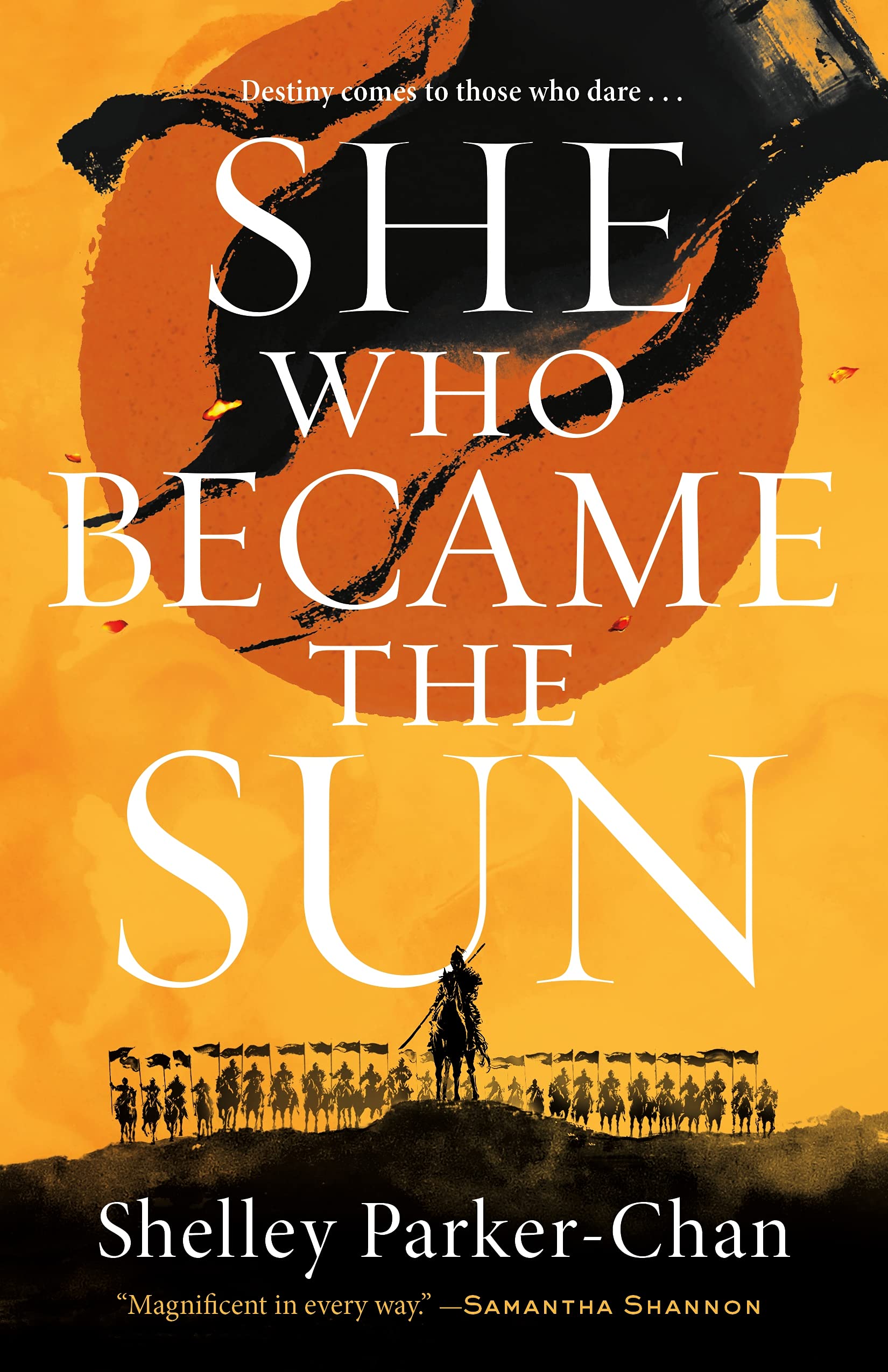
Unlike anything I've read before, the comparisons to Mulan and The Song of Achilles really don't do this amazing masterpiece justice. And, yes, it is a masterpiece: massive in scope, challenging the binaries of both gender and history, and woven together by characters who will leave you devastated and enthralled. This is historical fantasy, mainly due to some slight fantastical elements as well as the flipping of a historical narrative, but in spite of its modern take on many things, it reads like you've picked up a translation of a Chinese epic from antiquity. I do have quite a bit of prior knowledge regarding Chinese history, but if you're intimidated by the vast historical aspect of this book, don't be -- it is infinitely readable, informative, and will leave you wanting to learn more about the dynasties at play here.
Zhu Chongba -- we are never enlightened as to her birth name -- is one of those characters that is impossible to forget. She's this fascinating mixture of callousness combined with a sort of good-natured jollity, and in spite of her rather coldhearted ambition, she is so easy to root for. I refer to her here with female pronouns, as this is how she references herself in her narration, but it's important to note that she is what we would probably consider as nonbinary today. She exists somewhere between male and female, between feminine and masculine, and while she doesn't identify with her femaleness or female body (especially since it was such a point of contention when she was a child), neither does she identify with her "new" maleness. Her ability to switch back and forth, to be both one and the other, is beautiful, and I think so many people will feel truly seen because of Zhu's gender identity. Her character is remarkable in every way.
There are several other POV side characters, but the other "half" of Zhu's story is the Mongolian general Ouyang. Oh, how much I adored this character! He is layers upon layers of complexity (much like Zhu), and his pain is actually painful to read because it is so vividly rendered. It's hard to elicit this kind of response in readers, but Parker-Chan does it with an effortlessness that is nothing short of incredible. Ouyang is a eunuch, and therefore his own relationship with gender is just as confused and complicated as Zhu's, but he is not quite able to embrace it as she later does. His relationship with the son of the man who castrated him was so deep, so filled with hurt, that I both longed for their scenes together and also had to prepare myself for the level of emotion they bring to the surface.
Oh, that reminds me: I can't complete this review without mentioning the relationship between Zhu and Ma Xiuying, the daughter of a rebel (and the rebellion that Zhu finds herself tangled up in). Their dynamic was nothing short of wonderful: playful, heartfelt, full of emotion and an understanding that makes their relationship unique in its depth. Parker-Chan created such a fantastic, beautiful thing between them, and I actually found myself smiling when they were making each other laugh. And the pain, too! Parker-Chan excels at bringing in a mix of feelings that will leave you unsure whether you're heartbroken or happy.
This review is already too long, but before I finish this up, I do want to also applaud Parker-Chan's deftness at creating a story that I think will be sticking with me for a long, long time. I really cannot express enough how unique this tale is, and how it left me saddened when I closed its pages. The history here is epic, but in spite of the feeling of spanning years and years and creating and ending dynasties and the sheer hugeness of history, you never lose the sensation of being close with Zhu or Ouyang or any of the others. This is a feat of storytelling, and I'm beyond thrilled that this is a duology, and we'll be getting one more book in this series. Parker-Chan has been cemented onto my favorite authors list, and I will be eagerly picking up anything else they put out.
I can't recommend this one enough, and this is one case where the hype doesn't even do this amazing story justice. Fit this one onto your reading list, and do it quickly -- you won't regret it.
Tuesday, January 25, 2022
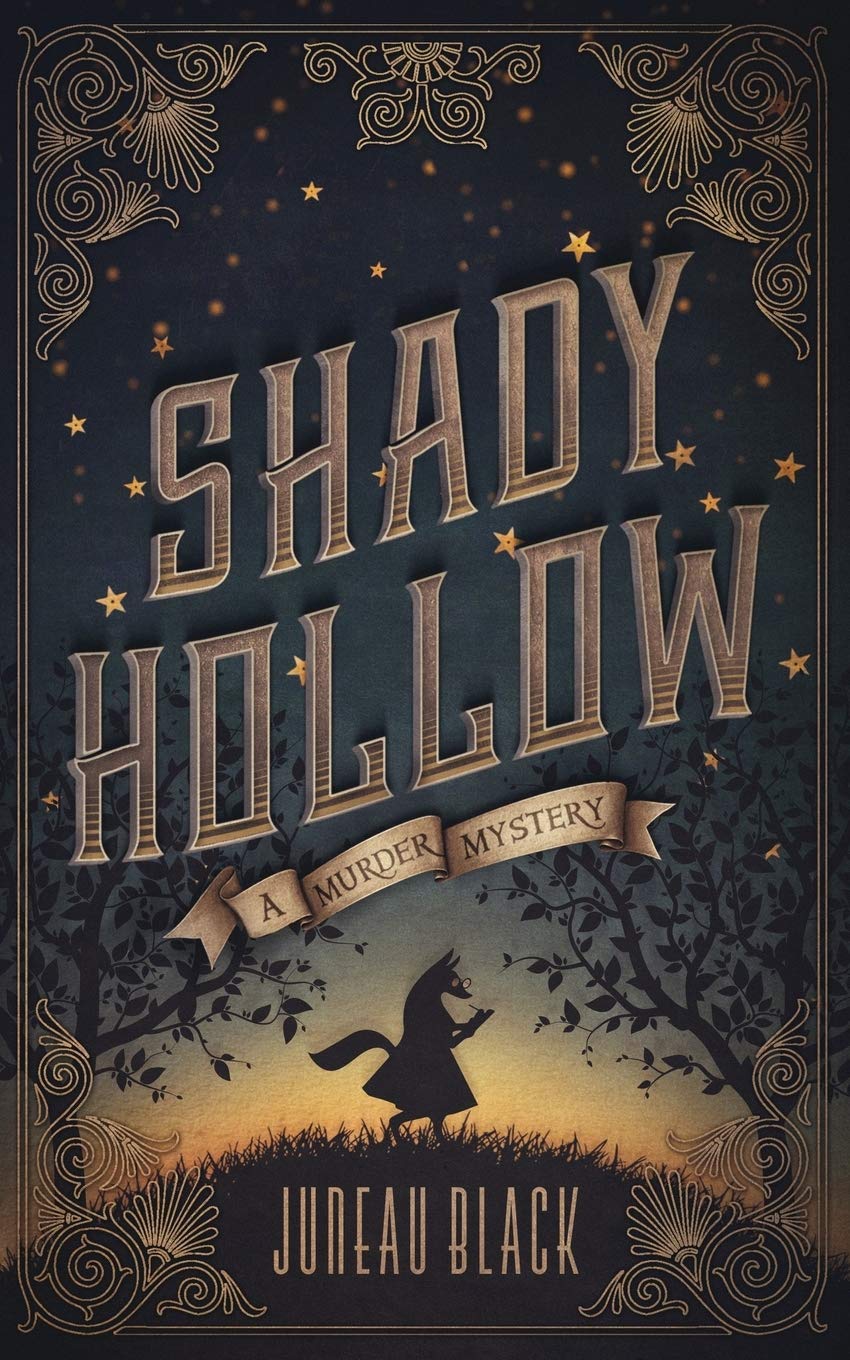
Book Review: Shady Hollow by Juneau Black