Pages

Book Review: The Absinthe Underground by Jamie Pacton

Tuesday, February 6, 2024


Thank you to NetGalley and Peachtree for allowing me to read this ARC!

Content Warning: minor violence, alcohol.

Sybil and Esme live in Severon, a decadent, sprawling city full of nightclubs, art, and beauty. For the two girls, however, life there is not all it seems: they're struggling, barely supported by their meager jobs, each of them dreaming of a future where they can spread their wings. Sybil longs for adventure, for something beyond the boredom of her humdrum daily life; Esme, on the other hand, is only too content to work at a library and have a home filled with cats. Despite their differences, they're best friends, and when they're drawn into the world of Fae by the beautiful, mysterious Maeve, it's together. Maeve promises them riches that they can't even fathom, if they do one thing for her: steal the royal jewels from the Fae Queen.

It was the intriguing setting of The Absinthe Underground that truly made me decide to request an ARC. The story (partly) takes place in the city of Severon, inspired by Belle Epoque Paris. It's a unique idea for a story, especially when most fantasy books seem to draw their inspiration from medieval Ireland or England. Although it didn't up being quite to my tastes, I would love to see more people following Pacton's lead and giving us stories with unusual settings!

Our two heroines, Sybil and Esme, are complete opposites, but despite their differences (or perhaps because of them), they're inexplicably attracted to each other. Unfortunately, I say inexplicable because aside from small things like enjoying each other's company and finding one another attractive, there's very little character development for either of the girls -- and this impacts their relationship, too. Although I liked both of them well enough and found their narration pleasant, their individual storylines and characterization are remarkably one-dimensional. They both have a set of traits and characteristics that the author has decided for them, and they never veer far from these predetermined boxes. This ends up limiting the narrative and its ultimate conclusion. To make matters worse, the writing tells us and doesn't show us, and this prevents you from feeling totally immersed in the world.

Don't get me wrong -- their relationship is sweet, and I did enjoy their moments of flirtatiousness very much. But the lack of growth is disappointing especially because the two girls are likable. Another problem that surfaces is that tonally speaking, The Absinthe Underground reads more as middle-grade than YA (in spite of the many, many references to alcohol and drinking, which I found slightly odd). It's a little jarring, as Sybil and Esme are referred to as being seventeen several times, but they come across much younger in their POVs. This isn't necessarily a problem but, for me, it occasionally made the story disjointed.

The primary problem, however, is that everything is so convenient. This is low, low stakes, which isn't always a problem, but for a heist in Fae, it seems a little lackluster. Somehow, someway, everything always works out for Sybil and Esme, to the point where you begin to wonder what's the point of reading anyway, since you know everything will work out in the end. Some people enjoy stories like that, and I have no doubt that there will be many readers who appreciate The Absinthe Underground, but it was boring for me to watch them get into sticky situation after sticky situation only for their problems to be miraculously solved. It gets into unbelievable territory towards the end. Before the last act, I was planning on giving out two and a half stars, but that felt a bit too generous by the last page. It also suffers from everyone being painfully transparent, and you have to either believe that Sybil and Esme are extremely naive, or extremely stupid.

Ultimately, this story just wasn't for me. Again, I have no doubt that many readers, especially young ones, will find a lot to love here, but it simply wasn't my cup of tea.

Book Review: False Witness by Karin Slaughter

Saturday, February 3, 2024


Content Warning: violence, death, sexual assault, rape, pedophilia, murder, drug addiction/abuse, parental abuse.


Leigh has spent her whole life trying to run from her past. She and her sister, Callie, did something when they were teenagers that has been haunting them ever since, and although Leigh has built a life for herself up from the ground as a successful defense lawyer and a wife and mother, she knows it's only a matter of time before her life implodes. And this possible destruction of everything she's worked for comes in the form of a high-profile client accused of a violent rape. This client makes it clear to Leigh that he knows exactly what happened twenty years ago, and that he's going to make her life a living hell. Forced to seek out Callie, who she has been estranged from, the two sisters will have to face a reckoning and, in the process, confront their own demons.

When people say that Karin Slaughter is one of the best thriller writers of this generation, they're not exaggerating. Although I've only read one of her previous novels, Pretty Girls, it's clear from the get-go that Slaughter possesses a talent that makes everything she puts out intensely and frighteningly readable. False Witness, like her other works, is dark, heavy, and in spite of the aforementioned readability, filled to the brim with topics that are often difficult to read about. However, she manages to pull off writing about this sort of stuff with grace and class, and though the material is graphic (and rather graphically written about), it never feels exploitative. 

The two main characters, Leigh and Callie, are sisters, and it is this bond that drives the entire novel forward. Their relationship is deeply complicated, with Leigh feeling more like Callie's mother than her sister, mostly due to their abusive mother, while also dealing with guilt from something that Leigh believes is her fault that led to Callie's heavy drug abuse and the subsequent destruction of her entire life. Callie, on the other hand, deals with everything with a careless attitude that belies the turmoil she's experiencing inside. Slaughter perfectly captures a sister relationship, with all its complexities, anger and love. 

The stakes are extremely high, and there's not a moment where you're allowed to forget it. I was tense reading this, wondering what was going to happen next, if Callie and Leigh were going to be able to pull off their next crazy stunt. This book is primarily a study of womanhood, sisterhood, and how sexual violence pervades women's lives, from childhood until old age. It could be depressing and, yes, it sometimes is, but throughout Slaughter manages to make this a beautiful and moving story about the devastating effects of sexual abuse and the end somehow leaves you with hope.

Overall, I'd highly recommend it, and I will definitely be seeking out more of Slaughter's books in the future.

Book Review: Sisters in Arms by Kaia Alderson

Tuesday, January 2, 2024


Content Warning: violence, death, assault, misogyny, racism.


Eliza Jones and Grace Steele are opposites. Eliza is spoiled, the daughter of a wealthy newspaper owner, while Grace has grown up counting every penny, all of her hopes and dreams reliant on her piano. But both of them have something in common: they're enlisting in the WAAC, the Women's Army Auxiliary Corps, and they will be some of the very first black women to serve. Drawn together despite their differences, Eliza and Grace are challenged not only by racism and misogyny, but also by the hardships of army life -- but amongst their fellow female soldiers, they discover a sisterhood of courageous women that will challenge and encourage them at every turn, especially when they are finally sent overseas. 

Originally I had requested this on Netgalley, and when I ended up not getting approved, I decided to pick it up at the book store. It has many things I look for in a book: female-focused, historical (and set during WWII), and a story highlighting the lives of black women. After reading the first few pages, however, I began to have an inkling that this might not be the book for me. I almost never stop reading a book once I've started, though -- unless it's egregiously bad or problematic, it somehow feels unfair not to give it a chance to get its footing. In this case, though, Sisters in Arms ended up being little more than a slog for me.

Our dual protagonists, Eliza and Grace, are both black women in their early twenties, but that's about where the similarities between them stop. For the first half of the book, I found myself liking Eliza best, as she's a little plucky and often makes a genuine effort to help others. Grace, on the other hand, is cold and distant, and while typically that wouldn't bother me in a character, it lends itself to the way that she treats Eliza, which I did not like whatsoever. She's rude, condescending, and sometimes even straight up hateful to Eliza, who does nothing but show her kindness every time they meet. Moreover, both of them come across as extremely juvenile -- until their ages were confirmed on-page, I half wondered if we were supposed to be reading about teenage girls. Everything, somehow, is very sanitary, reminiscent of a Hallmark movie, in spite of the fact that there are some dark moments and topics within.

Most of the time, I'm not particularly bothered if an author's writing style doesn't suit my personal tastes, but unfortunately, Alderson's writing just seemed a bit childish. It was more suited for YA than anything, and at times, disregarding the adult topics, I felt as if I were reading in that genre. The main thing is that I'm not a fan of fluff, and that's primarily what this book is. It's light, and although I don't like using the term "chick lit," that's really the only other way I can think to describe this. Fluff is not for me -- I prefer harder, darker books. So although I personally didn't enjoy this one, I imagine there are many who will, as this is exactly their type of genre.

It's boring, for me, when I read a book where everyone is fundamentally good. The ending nicely ties up all their loose ends with a ribbon, and I didn't find it quite believable or engaging. Eliza's father, for example, is "redeemed," and I found it a little hard to swallow. He is a domineering, manipulative man, and I didn't like the way the ending swept aside his former characterization. Many of the other characters suffer from this treatment at the end, too. I also found the conflict between Eliza and Grace, especially one part towards the end of the novel (which I can't discuss in detail without major spoilers), extremely puerile. The romances have that same problem, with the chemistry seeming forced.

However, I didn't know about the 6888th Central Postal Battalion before this read, and I love that it taught me about a piece of history that I didn't know -- and one that should be taught more often. These were strong, courageous women who rose up against all odds, and there are glimpses in this book of moments like that. For me, this one just didn't work, but I know there are many out there who will appreciate this story and enjoy it.

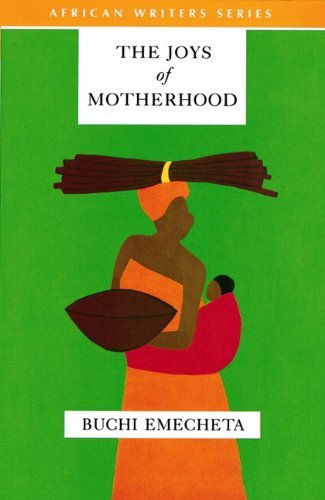
Book Review: The Joys of Motherhood by Buchi Emecheta

Friday, December 15, 2023


Content Warning: violence, death (including that of a child), sexual assault/harassment, misogyny, domestic abuse, racism, suicide.


Nnu Ego is the daughter of a proud chief of Ibuza and the one woman who refused to become one of his many wives. Raised up as the apple of her father's eye and the last remnant of the mother who died birthing her, Nnu Ego has high expectations for her life. She wants, as her community says, to "become a woman" -- to get married and have children. Her first marriage is a disaster; her second, considered a victory because of the children she's blessed with. Her relationship with her husband, a city man in Lagos, is fraught with difficulties, and although Nnu Ego is convinced that her life will become better once she has a child, preferably a son, it soon seems to her that the joys of motherhood are overrated -- not to mention few and far in-between. 

A poignantly reflective novel that seeks to unravel the complicated relationship women have with motherhood, Emecheta's The Joys of Motherhood, published in 1979, is an excellent glimpse into the early burgeoning of black, and specifically African and Nigerian, feminism. Our heroine, Nnu Ego, is at odds with the new way of living emerging in Nigeria. Growing up in a village, she is used to farming, to hardworking men and women and the traditional roles that go alongside this lifestyle. When she arrives in Lagos, keen to meet the new husband that will hopefully fulfill her desire to have children, it's a true and thorough culture shock. Here, in the big city, her husband does something that, in Nnu Ego's eyes, is totally against all of the gender norms of masculinity she's grown up with: he washes and launders his white employers' clothes.

These are just a few of the ways that gender norms are expressed in Emecheta's writing. Most of it focuses on Nnu Ego's expectations of herself, and other women: you don't "become a woman" until you have a husband and until you have a child. Until that happens, you live a half-life, waiting to become fully human. Emecheta compares motherhood and womanhood to slavery over the course of the novel; at one point, Nnu Ego thinks of her children as the chains of her slavery, her husband Nnaife knowing that as long as her children with him live, she is bound to him forever, that she is unable to leave them.

It must be said that this novel is crushing in its bleakness. Time and time again there is subtle hope that Nnu Ego will break free from the cyclical nature of the life she's living, or perhaps that someone else in the novel will, but despair is the most constant emotion that permeates The Joys of Motherhood. Its ending, in particular, is devastating -- however naively, I kept thinking that something had to give. However, I'm so glad that I chose to read this, as it's a truly insightful, deep, and complex narrative that will stick with you long after you've finished the last page.

Highly recommended, and unmissable if you're interested in African feminism. 

Book Review: Blood Sisters by Vanessa Lillie

Wednesday, November 1, 2023


Thank you to NetGalley and Berkley for allowing me to read this ARC!

Content Warning: violence, death, misogyny, racism, off-page sexual assault/rape.


Syd Walker is haunted. Fifteen years ago, a single night in her small Oklahoma hometown changed her life forever, driving her to move to Rhode Island and leave behind her family. Although she's sworn she'd never go back, Syd also works for the Bureau of Indian Affairs as an archeologist, and the past has come calling with the discovery of a skull on a piece of land that is near and dear to Syd's heart. When she returns to Picher, she's shocked to find out that her sister, Emma Lou, has vanished -- and begins to suspect that her sister's disappearance is linked to the skull and to that night so many years ago that Syd has been running from ever since. 

An exploration of the murdered and missing Indigenous women epidemic, Blood Sisters is set in the small, now abandoned, town of Picher. In 2009, Picher was officially declared as uninhabitable, owing to its high level of toxicity due to waste from mines. Our heroine, Syd, grows up amongst the chat piles, playing with her friends until the day that her life changes forever. While the premise itself is interesting, and the featuring of Picher adds another layer of depth and intrigue, the execution simply did not live up to its potential.

Syd, our narrator, is one of the main problems. She's neither interesting nor likable enough to carry the novel on her back, and what's most jarring about her is that she constantly and consistently makes decisions that are simply unbelievable. In spite of the fact that she works as an archeologist for the BIA, and there seems to be the suggestion of her intelligence, she acts and operates in a way that can only be described as stupid. It's understandable that she values her own life very little, a common problem that arises with survivor's guilt, but she also seems to not think very much about the people in her life and how her actions put them into danger, too. You would think this would be something she'd be highly aware of, due to her past, but apparently, that's not the case. 

There's a gimmick that doesn't work well in this book -- I won't spoil it, although it happens very early in the book and continues until the end. It somehow felt cheap, and as if the author was looking for a way to impart information that Syd couldn't know, making the eventual reveal of what's truly happening all the more eyeroll inducing. In a further exploration of what I mentioned with Syd's character, it's also worth noting that none of the other characters fare very well, either. All of them are flat and one-dimensional, and sometimes the characterization (particularly in regards to one character at the end of the book, which I can't go into without spoiling the entirety of the plot) feels like it's out of a bad action movie. 

The plot completely and totally goes off the rails. It's melodramatic, it's unbelievable, and it makes you want to put the book down and not pick it back up again. It's hard to believe what you're reading. It becomes so convoluted, so much like the aforementioned B action movie, that it loses any interesting threads it's picked up along the way. I was actually quite shocked that Lillie went down the route that she did, and the second half of the book is where it really all went downhill for me -- ending up with only two stars.

I'm giving Blood Sisters two stars only because the first couple of chapters are pretty good, and I think the premise was unique and interesting, but it's not something I'd pick up to read twice.

Book Review: Learned by Heart by Emma Donoghue

Monday, August 28, 2023


Thank you to NetGalley and Little, Brown for allowing me to read this ARC!

Content Warning: racism, misogyny, homophobia, death.


Eliza Raine is different than the other girls who attend the Manor School for Young Ladies in York. She's the daughter of an Englishman and an Indian mother, a woman who was not formally wed, and when she returned to her father's home country as a little girl, it was a fact she was made distinctly aware of. Only fourteen, she keeps to herself at school, isolated in a room by herself, away from the other bedrooms. But when Anne Lister arrives -- charismatic, fearless, bold Anne -- Eliza's world is turned upside down and, as the two girls grow up, their relationship will leave indelible marks on them both.

Anne Lister is considered one of the world's "first modern lesbians." She was, as I described her in this book's summary, bold and charming -- a true go-getter in every sense of the word. While there have been quite a few adaptations and books revolving around her life (including the wonderful and critically acclaimed Gentleman Jack, which has managed to bring her into cultural consciousness), few have made little more than a passing mention to her education at a school York, where, at only fourteen, she fell in love for the first time with another girl. This girl has, for the most part, faded from history: Anglo-Indian, the daughter of a doctor, and someone who paid the price for daring to be fearless, something that whiteness and wealth seemed to protect Lister from.

Eliza is our narrator, and we alternate between passages of her memories of them as schoolgirls, and her letters written to Anne some ten years later. At first, as a fourteen year old child, Eliza is hesitant, doing her best not to get any marks at the Manor, keenly aware of the fact that while her compatriots may get away with some things because of their whiteness and privilege, she will not. She stays in a room by herself, sequestered away on the other end of the building, never quite sure if it was intentional or merely because of convenience. Her life suddenly becomes interesting, however, with the entrance of Anne -- and if, like me, you've read about Eliza and Anne before, you might have an idea where all of this is going. 

Donoghue is truly a master at her craft. She so effortlessly and seamlessly weaves together true emotion, humor, and something quite heavier, all while spinning together such beautiful sentences that I sometimes had to pause just to appreciate them. Perhaps it comes from years spent perfecting her writing, but there surely has to be something else, something innate, that makes her so damn talented. She is an expert at capturing whatever time period she's writing about, and it's obvious that she does very intensive research. As you might expect from the novel's plot, there are many heavy topics addressed here -- sexism, racism, homophobia, and more -- and Donoghue does it with both a sense of how important they are, and sometimes with a little tongue-in-cheek. 

In particular, though, the racism that Eliza experiences is very thoughtfully dealt with, and I think Donoghue does an excellent job of showing us just how much white privilege allows Anne to get away with what she does. Anne, of course, faced many challenges throughout her lifetime, and as a butch lesbian in the nineteenth century, her obstacles are nothing to be sneered at, but the juxtaposition of Eliza's life with Anne's makes a clearcut display of how wealthy white people are allowed to be eccentric, or different, without losing their liberty.

Another element I must compliment is that Donoghue does not romanticize Anne. If you've read her journals or studied her life to some degree, it becomes obvious that Anne was many things, but she was not often kind, nor was she very self-aware. She could be avaricious and cruel, and more often than not, she discarded her many lovers with seemingly little care to their feelings or the impact on their futures. Not to say that there weren't many good things about her, but it's nice to see this realistic, flawed portrayal of her, something like the real person. Eliza, too, has her flaws, and the characterization and development is yet another reason why Learned by Heart was a five star read for me.

Ultimately, the storyline here is tragic, and I was moved nearly to tears by the end. This book is beautiful, and wrung real emotions out of me. Because of Donoghue's decision to uplift the voice of a woman who was silenced in real life, I will always remember Eliza Raine. 

Highly, highly recommended -- get yourself a copy as soon as you're able. 

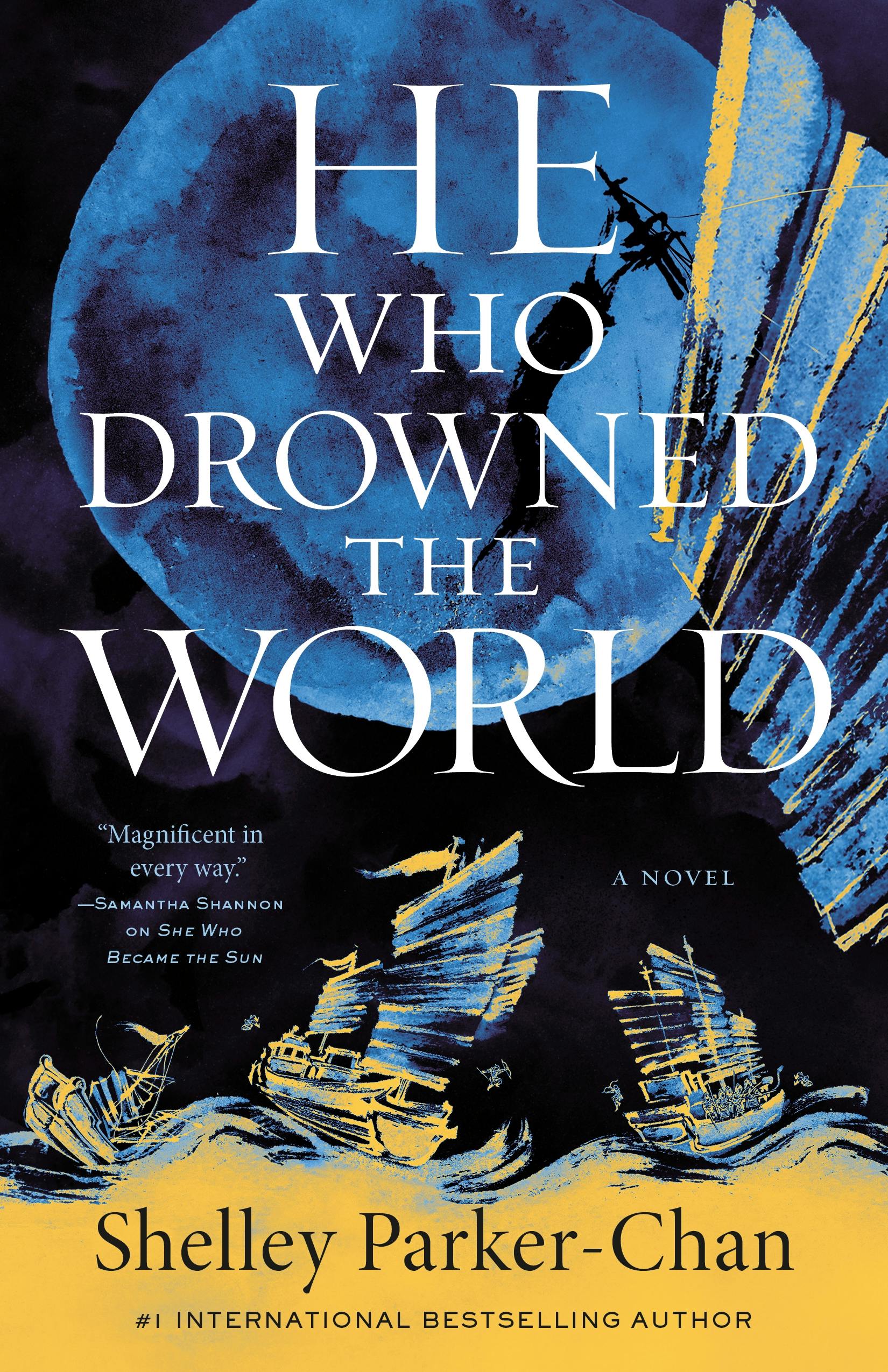
Book Review: He Who Drowned the World by Shelley-Parker Chan

Wednesday, August 23, 2023


½

Thank you to NetGalley and Tor for allowing me to read this ARC!

Content Warning: violence, death, misogyny, rape, sexual assault, child abuse, homophobia, transphobia, torture, self harm.


Zhu Yuanzhang is so close to being on top of the world. After her shocking victory with her peasant uprising, Zhu has implemented herself as the Radiant King, and doesn't plan to stop there. Her old enemies, however, have not forgotten her -- and after her rise to power, she's created many new ones in the process, too. One of them is Madame Zhang, the former courtesan who is just as willing to claw her way up the ladder as Zhu is, and she's quickly becoming Zhu's most daunting opponent. In the hopes of overcoming Madame Zhang and making her way to Dadu, where she can seize the throne for herself, Zhu is forced to ally herself with General Ouyang, the very man who was once her fiercest competitor. But unbeknownst to any of these contenders, Wang Baoxiang -- Esen-Temur's scorned and ridiculed scholar brother -- has made his way back to the capital and, with his calculating maneuvers, may just bring the entire empire to its knees.

There are no words in the English language that could accurately describe how excited I have been for the sequel to She Who Became the Sun. It easily became one of my top books of the year, and it will forever remain inscribed in my mind and heart. Parker-Chan has created a world populated with characters who are truly morally gray, and they're never afraid to allow those characters to venture onto the path of darkness and destruction, which is explored much more in depth this time around. Although Zhu remains our protagonist, there's a much heavier focus on Baoxiang, the new Prince of Henan, who is -- much like my beloved General Ouyang -- exclusively fixated on vengeance.

Let's start by talking about the arc of my two favorite characters, Zhu and Ouyang. Zhu remains her usual indomitable self, following her ambitions selfishly and ruthlessly. Ouyang has, obviously, taken quite a few knocks, and it's evident in his character, even more so than before. However, I had the sinking feeling as I read this novel that, somehow, Zhu has taken more of backseat than before. That isn't to say that she doesn't get plenty of chapters, or that her arc is not completed, but to me, it seemed as if Parker-Chan was so enjoying Baoxiang's character and his chapters that they sort of put everyone else on the backburner. While I like Baoxiang well enough, and he's very interesting, the nucleus of everything being on him was a bit disappointing for me. Some of my problems with him arise later in the book, and truthfully, I can't discuss those issues without spoiling the ending of He Who Drowned the World. But, I think it'll have to do to say that while the novel seems intent on having us sympathize with him, I found that extremely difficult to do as the plot progressed.

Zhu is and always will be the shining star of the duology, and I greatly enjoyed seeing her growth -- this time around, she actually begins to experience emotions that she hasn't quite encountered before -- and it's just easy to root for her. Her decisions are, more often than not, painful in their mercenariness, and although she makes some choices towards the conclusion that were a bit hard for me to understand (or agree with), she is never not interesting, never the kind of character you wish was off the page. In fact, once again I must applaud Parker-Chan's fearlessness in making Zhu greedy, ruthless, and yet still somehow tender with those she loves. Zhu and Ouyang are posited as mirror images and, while this is undeniably true, He Who Drowned the World makes it more apparent than ever that Ouyang is an example of the path that Zhu could one day find herself on. Ma Xiuying, one of my other favorites, has an extremely complicated arc this time around, and one that I'm still not sure how to feel about.

One of the few flaws in She Who Became the Sun (if you can call it a flaw; it really is just my opinion) is how it underutilizes Ma during much of the book. She gleams constantly with potential, and while Ouyang, Baoxiang, and Zhu are, in many ways, twisted versions of one another, she stands out as being singular. In comparison to all of our main players, she retains a compassion and gentleness that serves to make her simultaneously stronger and more vulnerable to the game. Yet she has a very tiny bit part in this novel, up until the last act, and I can't help but feeling slightly -- I'm not even sure what the correct word would be. Put off, maybe. Maybe one day I'll be able to fully put into words how I feel about Ma's arc, but today isn't that day. All I can say for now is that it was not what I expected nor hoped to see for such an interesting character.

Parker-Chan's writing is gorgeous. This has stayed consistent throughout their books, and most likely will always be a feature of whatever they choose to write. The way they use language is with true craftmanship, and honestly, I'm quite envious of the absolutely stunning sentences they come up with. Just beautiful, and makes the reading fun and flow so well, regardless of the difficult topics being addressed.

And with the mention of difficult topics, there is something else I'd like to touch on. He Who Drowned the World very heavily features rape, sexual assault, and misogyny. Now, these elements are, of course, present within the first book as well, but here they've certainly been dialed up a few notches. We actually get a few on-page rape scenes, and while I don't have any qualms with reading or writing about dark, hard things (and I understand why some authors choose to include such scenes), at some point these things started to feel almost... gratuitous. I hate saying that, as I know that is not Parker-Chan's intention whatsoever, but there were some I particularly took issue with. This time around, it feels almost as if every single female character is being "brought down" or "degraded" by a depiction of rape or sexual assault. Again, I really can't get into it in detail without spoiling many of the big plot points, but it's something I felt remiss not to mention at all, especially since it was something weighing heavily on my mind as I read. The scenes themselves are not extremely graphic, and obviously they're not written to be titillating, but some of them verged on the border of being just too much. Despite Parker-Chan saying that they don't write "grimdark fantasy," this sometimes felt like just that. For me, it's simply an issue of wondering why we have to see all of them on-page. I think some of them could have taken course in the beginning or aftermath without taking anything away from what's going on.

In conclusion, I liked but did not love this book. This ended up being a slightly disappointing end to the duology for me, and while it contained many things I did love, in the end the issues I grappled with throughout my reading kept me from adoring it as a whole. With that being said, I do want to say I love Parker-Chan's writing and characters, and I really can't wait to see what else they come up with. I'll definitely be reading whatever they write next.

 
FREE BLOGGER TEMPLATE BY DESIGNER BLOGS