Pages

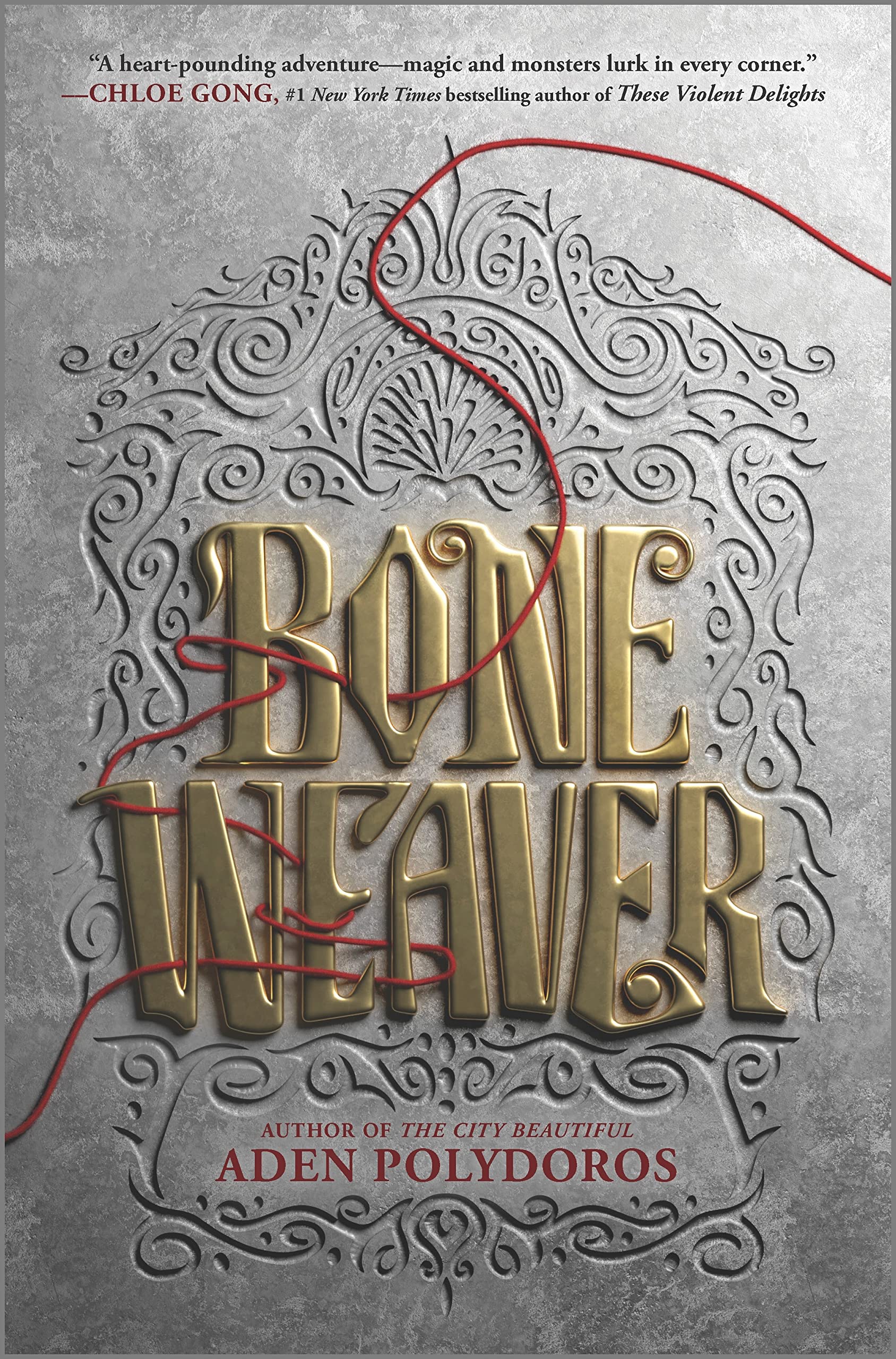
Book Review: Bone Weaver by Aden Polydoros

Monday, September 19, 2022


Thank you to NetGalley and Inkyard Press for allowing me to read this ARC!

Content Warning: death (including that of a child), murder, violence, racism, religious persecution, misogyny.


Seventeen-year-old Toma lives in the wilderness of the vast Kosa empire. Although the empire is turning in on itself, in the midst of a deadly revolution, Toma is unaware of the political tensions and ongoing civil war, having not been amongst other humans in years. Suddenly, the unrest is brought to Toma and her adoptive upyri family's doorstep with the crashing of an airship, holding only two passengers -- and one of them is Tsar Mikhail himself. Forced by disaster into a mission of her own, Toma accompanies Mikhail on his journey to destroy Koschei, the leader of the anti-Tsarist revolutionaries, picking up another straggler, Vanya, on their way. As the trio grows closer, Toma will be forced to confront her past and, even more frighteningly, her future -- and all three of them will learn that true monsters don't wear their wickedness on the outside.

Finally, a book from my list of most highly anticipated 2022 reads that didn't disappoint! Bone Weaver is everything I could ask for in a Russian and Slavic inspired fantasy, replete with folklore and monsters, all while addressing the proletariat revolution and the faults of its fantasy empire.

To start off, this book is simply full of monsters. Something that often bothers me when I pick up a fantasy book is that while it proclaims to have pages full of monsters and folklore, they seem little more than window-dressing. That's never the case in Bone Weaver: there are rusalki, mavki, upyri, and more, all written about with an admiration for their haunting, sometimes frightening, beauty. It's obvious from the first page that Polydoros loves writing about these creatures, and although this obviously deals with much more mature subject matter, it reminded me a bit of reading The Spiderwick Chronicles -- and what more could I ask for then that?

As for the characters, all of them are lovable, even when they are not nice or friendly or on their best behavior. Toma, of course, is my favorite, and she operates as the kind of heroine that is naive but not obnoxious (which is hard to do; instead, her naivete feels endearing). Her companions, Mikhail and Vanya, are equally wonderful, although I will say that it took me a while to warm up to Mikhail. Perhaps it's because I'm a bit biased, but I wasn't sure that I would buy into his rehabilitation, into the narrative that he will truly fight for change in his empire. By the end, however, I greatly enjoyed Mikhail's character, and even ended up rooting for him (which took me by surprise). He still wasn't quite on the level of Toma or Vanya for me, but nonetheless, I think that Polydoros did an incredible job crafting every single character we encounter on the page. 

The worldbuilding has real depth to it. One of my favorite things in fantasy books is that feeling you get that, just beyond the page, there's a whole world out there -- real and fully fleshed out -- that we've yet to see. I never, ever say this, but I almost wish that Bone Weaver had been the first in a series. It feels as if there's so much more to explore, even with regards to Toma's background, for example, or Vanya's. My only real complaint about this book is that it simplifies the revolution, and in turn, simplifies its (amazing) villain. However, this is YA fantasy, so I don't mind it being boiled down to basics -- and that isn't to say that there isn't complexity or nuance in this book because there's plenty. 

Highly, highly recommended. This is, without a doubt, the best Russian and Slavic inspired fantasy I've ever had the pleasure of reading. 

Book Review: Our Lady of the Nile by Scholastique Mukasonga

Saturday, September 3, 2022


Content Warning: death (including in childbirth), violence, murder, racism, misogyny, genocide, rape, pedophilia, grooming, racial slurs.


At the Belgian Catholic school Notre-Dame du Nil, they are meant to be raising up "Rwanda's Female Elite." These young women are in the middle not only of discovering themselves, but also of discovering what exactly Rwanda's revolution means for them. The only two Tutsi girls at the school, Veronica and Virginia, are particularly afraid of the lessons they'll be forced to learn -- and of what it means to be a "true Rwandan," as they struggle to come to terms with the ethnic hatred and tension building between the Hutu and Tutsi peoples. 

Considered a modern classic, Our Lady of the Nile is a bit hard to summarize -- part coming-of-age, part analysis of colonization, genocide and misogyny, it deals with many heavy topics, often with a hint of dark humor. There's a satirical element to Mukasonga's clever, on the nose writing style, but unlike some books I've read that use levity when discussing serious matters, it never cheapens the horror of what's happening in these early days of the Rwandan genocide. 

All of the girls have their own unique personalities, although the piece's villain, Gloriosa, perhaps suffers a bit from being rather shallow. I don't list this as a criticism, however; Gloriosa, with her belligerent, blind hatred of all Tutsi, serves as a mouthpiece for the violent beliefs of the Hutu who are intent on wiping out every trace of Tutsi from the nation. Each chapter provides an insight into one of the girls' inner lives, but Veronica and Virginia operate as the heart of the story, providing us with an opportunity to see what it's like to live in a world that is set against your very existence.

Mukasonga's ruthless examination of Rwanda's colonization stands out brilliantly, even amongst the many other issues tackled here -- in fact, she does an excellent job of showing just how colonization has not only inflamed the problems between the Hutu majority and Tutsi minority, but also how it has been encouraged by Rwanda's white intruders.

Although I'm a white American, Mukasonga transports you into the world of these young women, and allows you to get an inside look on Rwanda's genocide, its politics, and its cultural innerworkings. The only reason I have not given this novel a full five stars is that the language is, every once in a while, a bit strange; perhaps this is merely an error of translation but, nonetheless, it sometimes kept me from feeling fully engaged. The girls' individual narratives could also have benefited from being a touch more personal; I think that an insight into their lives away from the lycée would've added great depth.

All in all, highly recommended. Touching, sometimes funny, with an ending that will leave you thinking.

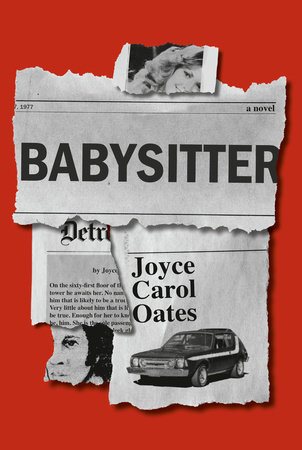
Book Review: Babysitter by Joyce Carol Oates

Tuesday, August 23, 2022


½

Thank you to NetGalley and Knopf for allowing me to read this ARC!

Content Warning: death (including that of a child), murder, violence, rape (on-page), homophobia, racism, racist slurs, homophobic slurs, victim-blaming, suicidal ideation, child abuse (physical, emotional and sexual).


Detroit, 1977. Hannah Jarrett lives a privileged life; the wife of a wealthy man, the mother of two perfect children, the co-chair of many esteemed fundraisers and charity events. In the midst of her outwardly perfect -- if boring -- life, Hannah suddenly and unexpectedly meets a man who she is instantly drawn to. Calling himself only Y.K., Hannah falls headfirst into an affair that will change the course of her life forever. In another part of Detroit, there's Mikey, connected not only to Y.K., but to Babysitter, the child killer stalking the streets. As Hannah grows more and more suspicious of Y.K., questioning whether he is implicated in the Babysitter killings, everyone -- including Hannah's children and her husband -- will be drawn into the turmoil...

Joyce Carol Oates is adept at crafting stories centered around darkness. Of the several other books I've read by her, they were all similarly filled with themes of lust, hatred, and murder, and while some of them were more successful than others, I knew going into Babysitter that this type of tale was in good hands. Her stories often play with subversion, subterfuge, and nontraditional forms of writing, and so those who are not familiar with her style may find it a bit strange at first -- even I, having not read anything by her in a while, found it a bit jarring at first. However, the longer I read, the more compulsively I found myself consuming this, eager to know what frightening turn the plot might take.

Hannah Jarrett is our (main) protagonist; I would describe her as being squarely in the middle of the events that take place here, as well as the characters who surround her. She, both narratively and as a character, provides a sort of stepping stone, an opportunity for the reader to see themselves in the story. However, like most of Oates's protagonists, she is not likable on principle; she is complex, deeply flawed, and very, very naïve. I appreciated Oates's efforts to show us that while Hannah thinks of herself as being "rational" and "nonracist," she nonetheless continuously insults her children's Filipina nanny, Ismelda, with microaggressions. She projects her insecurities and fears onto Ismelda, the "other," just like her husband, Wes, does, though his is more outwardly aggressive, more "male."

Racism is a big theme in this book, as is fitting, I think, for a novel that takes place in 1970s' Detroit. Present, too, as in all of Oates's novels, are the questions of womanhood, femininity, and how motherhood changes women (for better and worse). Some of her attempts at dissecting racism are better than others but, overall, I think the message here is well-conveyed -- that racism is insidious in its many forms, and that white women perpetuate racism in ways different than their male counterparts (but that all are equally reprehensible). Her discussions of misogyny are incisive and clever, as always.

Now, onto why it didn't quite get the full four stars from me... my main complaint is that, sometimes, I struggled to truly "click" with the story or its characters. Mistakenly, I thought that this novel would revolve mainly around the Babysitter killer, also known as the Oakland County Child Killer, who I do have some prior knowledge of. Instead, this deals mostly with people who are connected to him, both tangentially and more closely, which I found a touch disappointing. The child killings serve more as a backdrop for what's going on in Hannah's life, as well as exacerbating her already heightened fears as a mother. It's important that I mention that while this book does deal with many dark, horrible things, sometimes in graphic detail, I never felt as if Oates was exploiting the real life tragedies that Babysitter committed. 

I didn't like Hannah, per se; she's gullible, a bit spineless, not to mention her strange racist assumptions about Ismelda. However, I see the purpose of her story, and I do enjoy the fact that Oates doesn't worry so much about how "relatable" or "likable" her characters are. The story also feels disjointed, sometimes confusing; while this does work well in some aspects, in others, it fails to achieve its intentions. For example, the ending -- I'm still confused about what exactly it was meant to signify, even how much of it is "real." That might work for some readers, but in my case, it left me feeling a bit let down after the rather arduous journey I took to get there. 

Ultimately, I think Babysitter succeeds in many of its efforts, but as a whole, it felt like a jigsaw puzzle missing a few pieces. I'd recommend this to Oates's fans, and to anyone who might have a fascination with true crime like I do. 

Book Review: The Oleander Sword by Tasha Suri

Monday, August 15, 2022


Thank you to NetGalley and Orbit for allowing me to read this ARC!

Content Warning: death, violence, murder, emotional abuse, misogyny, body horror,


After the prophecy that has named her the rightful Empress of Parijatdvipa, Malini is well on her way to deposing her cruel brother. Although she anticipates being defied at every turn, her newly-appointed status as a ruler chosen by the gods has left her more open than ever to criticism and hardship. Meanwhile, Ahiranya has finally found its freedom from imperial oppression, and Priya has risen fully to her position as an Elder. The magic that flows through her body, however, is changing -- and Priya is no longer sure if she knows what she's capable of. As the war rages on, Malini realizes that she needs Priya -- her secret weapon -- and against all odds, they find themselves together once more... but will their reunion end in happiness, or destruction?

I don't read many series these days, but after I finished The Jasmine Throne, I was so happy to find out that it was going to be a trilogy. Not only did I instantly fall in love with our two heroines, Priya and Malini, but I was also captivated by the magic system and the gorgeous world Suri has created. So, does the sequel live up to the amazing potential captured in the first book?

In my opinion, yes. We are once again following Malini and Priya, as well as several other characters introduced in the first book (including Bhumika, who I simply adore), and it felt like coming home to jump into their shoes again. Now, they're contending with even bigger problems than they were before, Priya with her new role as an Elder (a role that she isn't quite sure how to embrace) and Malini with keeping the faith she's engendered in her new followers. This book is much bigger than just Malini and Priya, though, and I felt like there was more of a focus on what's happening outside of them this time around.

The Jasmine Throne got some criticism for its many POVs, and, if anything, I did feel that this problem is not fixed -- if anything, it felt as if there were even more perspectives and characters to contend with. For me, it's not a problem, but I think that some people will struggle with it. There were moments where I wondered why, exactly, we were getting a certain character's perspective, or following a particular storyline, as it seemed to add nothing overall to either the plot or pacing. I'm also confused as to why, instead of allowing us to enter into the head of Varsha, Chandra's new wife, we are given the POV of her brother. I think it would have been more interesting (and fitting) to let us see the world and her marriage through her eyes.

Those are my main complaints; otherwise, I was just as enchanted by this entry into the series as the first. The moments between Malini and Priya were beautiful, and truly made the novel shine. I also love Bhumika, and you really get the chance to fall for her in this book. 

While it wasn't perfect (like I thought The Jasmine Throne was), this is a solid second book, and I'm excited (and scared!) for the final installment. 

Book Review: Set in Stone by Stela Brinzeanu

Wednesday, August 3, 2022


Thank you to NetGalley and Legend Press for allowing me to read this ARC!

Content Warning: death, violence, murder, rape (on-page), homophobia, misogyny, victim-blaming, outdated racial terms, racism, drowning, incest.


In medieval Moldova, Elina and Mira live totally separate lives. Elina is the wealthy daughter of a boyar, the aristocratic class that employ serfs and slaves, while Mira is a simple potter's daughter, used to going without a meal and trying to fight off the cold. But when the two are inadvertently brought together, there's an immediate spark between them, and they begin to realize that, as women, their stations in life might not be so different after all. As they come to terms with their feelings for one another, Mira and Elina both will have to make the ultimate sacrifice to achieve freedom -- and the possibility of spending their lives together.

Doesn't the premise for this book sound so great? Medieval Moldova is not a time nor place I've ever seen in another book, and it's a culture I'm not overly familiar with. Even more fascinating, the central relationship is between two women, and Set in Stone tackles many issues (some which we are, sadly, still facing today) over the course of Mira and Elina's journey. It saddens me to say I'm not able to give more than three stars here, though. For me, there were too many problems to bump this up to a full four stars. With that being said, let's delve into what worked for me, and what didn't. 

Firstly, Brinzeanu's writing style didn't click for me. It was a little too dry for my tastes, and when it wasn't, the similes felt strangely overwrought. There was more telling than showing, which grew a bit irritating over time. I wanted to actually feel as if I was experiencing the scenes, instead of being told of it secondhand. This problem persists throughout the novel, although I will say that the longer I read, the more acclimated to the style I became. 

Sadly, the characterization also struck me as a touch shallow. While I ended up loving both Elina and Mira, it took quite a while for it to actually feel as if you're seeing the events and emotions through their eyes. I also found the abrupt beginning to their relationship not only strangely paced, but I struggled with whether or not it made sense for young women of this time period and place. Personally speaking, I'm a huge fan of slow-burns, and I think there was more than enough time to work up to their relationship, and deepen it in the process.

That being said, I did root for both of them, separately and together, and this book offers a beautiful (and harrowing) insight into Moldavian culture, religion, class, and, of course, the lives of Moldavian women. There are some beautiful moments, suffused with nature magic and the tenderness of love, but once again, the writing style kept you at such a distance that it was sometimes hard to admire them fully. 

One of my other issues concerns a (very one-dimensional) side character, Dafina. Dafina is a Romani slave, and in the brief instances where she interacts with Elina, she comes off as stereotypically "mysterious," reading palms and telling fortunes. Had she been more developed, it might've not been an issue, but otherwise, she serves little narrative purpose -- well, she does serve a purpose, but it would be a huge spoiler to say how. Let's just say that the purpose is to further Elina's journey, and otherwise, Dafina is just a walking stereotype, there to make cryptic comments and save Elina's hide. The slur commonly used against Romani people is also frequently found in this book. As I'm not Romani myself, I can't say whether or not this is offensive in its historical usage (considering Set in Stone takes place in the Middle Ages). I would love some input on this; all I'll say for now is be forewarned, and it did make me uncomfortable when I was reading it.

Overall, I did like Set in Stone, but nothing about it blew me away. I'm not sure it's the kind of book that will stick with me for very long. If you're interested in the culture and the time period, I'd definitely say give it a shot, but as it stands, for me, this felt more like reading a screenplay. I will consider picking up whatever Brinzeanu writes next, however, as I imagine her second novel will improve upon the issues I've mentioned here! 

Book Review: A Strange and Stubborn Endurance by Foz Meadows

Sunday, July 24, 2022


Thank you to NetGalley and Macmillan-Tor/Forge for allowing me to read this ARC!

Content Warning: death, violence, murder, rape (on-page), victim-blaming, homophobia, self-harm, suicidal ideation (including suicide attempts), PTSD, animal death.


Velasin vin Aaro is shocked when his father announces that he has arranged a marriage for him, in the neighboring country of Tithena. Not only is Velasin unsure of being forced to move to a country he knows little about, but he will also be married to a woman -- and Velasin is gay. But when something horrible happens, revealing Velasin's sexuality, the Tithenai propose that he marries not Laecia Aeduria, but her brother, Caethari. Desperate to get away from his native Ralia, Velasin agrees, but when he arrives in Tithena, it becomes very clear that not everyone is happy about this alliance between the two countries, and will do anything to stop it. Teaming up with his new husband, Velasin and Caethari try to hunt down the murderous faction plaguing them at every step, and discover that sometimes, love can bloom in the strangest of circumstances.

Finally, a highly anticipated book that I absolutely adored! Swept up in the first few chapters, enamored with Meadows's gorgeous use of language, I realized quite quickly that this was most likely going to be the kind of book I just fell in love with. And that's exactly what happened! 

I love books that deal with arranged marriages, as they're often able to explore a side of romance and emotion that is sometimes absent in more quickly formed relationships, and I was so pleased that this one was actually a gay romance. Both Velasin and Caethari are instantly lovable; Velasin in particular, with his sharp, cutting witticisms and sometimes frustratingly obstinate personality, stands out as a character who will leave a lasting impression upon readers. Velasin's manservant (who is more like his best friend), Markel, was also very well-written, and the fact that he is mute and uses sign language to communicate was another exciting addition. We don't often see characters like that (or any disability of any kind), and so it was a breath of fresh air. As far as characterization goes, I do think that Caethari's sisters, Riya and Laecia, suffered a bit in comparison to others. They were both very interesting, and I would've liked to see a bit more of their inner worlds, too.

This book is beautifully diverse, as I'm sure you'll have gathered from some of what I've written above. Caethari's sister, Riya, is a lesbian; there are several nonbinary characters; a transgender character; and most of the cast is dark-skinned, to some degree. How refreshing it was to read something that had no qualms about including a diverse ensemble of characters, and did it without batting an eye. 

As for the plot, it's so unique to find a book in this genre that doesn't follow the tried-and-true fantasy formulas. Although there's plenty of Velasin and Caethari finding themselves, there's also a bit of a murder mystery going on, complicated by the layered politics both of Tithena and Ralia. While many other readers seemed to be disappointed by the revelation of who the villain is, I didn't mind it; I suspected who it was long before the reveal, but to me, it didn't seem rushed or hasty -- just the opposite, in fact. The clues are there from the very beginning, which is more than I can say for some books. I didn't feel cheated, either, as if Meadows had purposefully kept things from me in the narration that would've otherwise helped us to understand who might be behind everything.

The shining star of A Strange and Stubborn Endurance is Velasin and, by association, his burgeoning relationship with Caethari. Velasin has been through hell, and I felt that Meadows handled all of the difficult topics brought up in this book with grace. There is an on-page rape scene, very early on, which many people felt (understandably) uncomfortable with, but for me, none if it felt gratuitous or cheapening to the narrative. Velasin's growth over the course of this huge book was slow, sometimes painful, and beautifully executed. Everything he did, in regards to Caethari, felt like it made sense, and while everyone's journey of healing is, of course, different, I appreciated the slowness and gentleness of Velasin's.

All in all, this book is simply fantastic. I highly, highly recommend it, and I think that this is such a refreshing take on the fantasy genre. It's beautiful, heartfelt, sometimes funny, sometimes very, very dark, and the journey is well worth it. 

Book Review: These Feathered Flames by Alexandra Overy

Tuesday, July 12, 2022


Content Warning: violence, death (including that of a child), murder, parental abuse (emotional), torture.

Asya and Izaveta are twin sisters, the heirs of the queendom of Tourin. Once they reach a certain age, it will be determined which sister is meant to take the title of queen from their mother, and which will become the ancient, feared monster called the Firebird. Now, both coming into their own as young women, Asya -- who will become the Firebird -- and Izaveta -- the future queen -- are thrown into a world of ruthless politics and powerful magic, all coming to head with the murder of Asya and Izaveta's mother. Brought together once again after a long separation, Asya and Izaveta know longer recognize one another -- or themselves. But will they be able to come together again in the hopes of saving Tourin, and each other?

Anyone who has read some of the biggest fantasy books of the last few years will know that Russian folklore is in. There's the Grishaverse, of course, but also several others. This tale, inspired by the folktale "The Firebird," seemed like it might, at the very least, have some interesting takes on that old myth. I had the sinking feeling within the first few chapters that this book was not going to live up to my expectations, but -- against my better judgement -- I continued on, wanting to give it the chance to settle into itself. Frankly, I'm surprised I was able to finish it, but finish it I did.

The biggest problem with this book is the pacing. For the first 60%-70%, absolutely nothing happens in this book. You probably think I'm exaggerating. I wish I was. How so little could happen, with so much purportedly going on, baffles me still. There's several mysteries, political machinations, supposedly complex character relationships, and yet... nothing happens. We spend the majority of the first half caught up in Izaveta's and Asya's introspection, to the point of the plot suffering. While there's a lot of worldbuilding (that I would still argue is surface-level), I'm afraid that can only do so much, which brings me to the characters...

Izaveta and Asya have very separate, very defined personalities, but the problem is, we are being told rather than shown these traits. Yes, I get it: Asya is kind, insecure, and self-conscious; Izaveta is cold, manipulative, and emotionless. I can't even tell you how many times we are told about these elements of their characters, but up until the very end, I couldn't help but feel as if Asya and Izaveta are strangely shallow. The relationships they develop with their respective love interests are okay, but never really that interesting. Also, there's a lot of discussions and apparent issues with the relationship beween Izaveta and Asya, but really, they actually don't interact all that much, and never seem to get to the heart of the issues between them.

Now, with all of this being said... I didn't hate this book. It certainly disappointed me, but regardless, I think at some point, I will pick up the sequel (these books are a duology). I do want to see what happens to Asya and Izaveta, mainly because the last act did make me start to care for them. The ending was similarly disappointing, feeling rushed and cobbled together, but I do find myself intrigued enough to wonder where their journey will end up taking them. The writing is not bad; it's sometimes repetitive, but that's really my only criticism. I'm hoping that the second book will show improvement in plotting and characterization, and will be able to live up to the promise of this concept and series.

While I wouldn't say I recommend this, I would say that there's potential, and I think many people will (and do) love these books. If the plotting, pacing, and character issues could be resolved, I actually think this would be a strong starter. 

 
FREE BLOGGER TEMPLATE BY DESIGNER BLOGS