Pages

Book Review: Learned by Heart by Emma Donoghue

Monday, August 28, 2023


Thank you to NetGalley and Little, Brown for allowing me to read this ARC!

Content Warning: racism, misogyny, homophobia, death.


Eliza Raine is different than the other girls who attend the Manor School for Young Ladies in York. She's the daughter of an Englishman and an Indian mother, a woman who was not formally wed, and when she returned to her father's home country as a little girl, it was a fact she was made distinctly aware of. Only fourteen, she keeps to herself at school, isolated in a room by herself, away from the other bedrooms. But when Anne Lister arrives -- charismatic, fearless, bold Anne -- Eliza's world is turned upside down and, as the two girls grow up, their relationship will leave indelible marks on them both.

Anne Lister is considered one of the world's "first modern lesbians." She was, as I described her in this book's summary, bold and charming -- a true go-getter in every sense of the word. While there have been quite a few adaptations and books revolving around her life (including the wonderful and critically acclaimed Gentleman Jack, which has managed to bring her into cultural consciousness), few have made little more than a passing mention to her education at a school York, where, at only fourteen, she fell in love for the first time with another girl. This girl has, for the most part, faded from history: Anglo-Indian, the daughter of a doctor, and someone who paid the price for daring to be fearless, something that whiteness and wealth seemed to protect Lister from.

Eliza is our narrator, and we alternate between passages of her memories of them as schoolgirls, and her letters written to Anne some ten years later. At first, as a fourteen year old child, Eliza is hesitant, doing her best not to get any marks at the Manor, keenly aware of the fact that while her compatriots may get away with some things because of their whiteness and privilege, she will not. She stays in a room by herself, sequestered away on the other end of the building, never quite sure if it was intentional or merely because of convenience. Her life suddenly becomes interesting, however, with the entrance of Anne -- and if, like me, you've read about Eliza and Anne before, you might have an idea where all of this is going. 

Donoghue is truly a master at her craft. She so effortlessly and seamlessly weaves together true emotion, humor, and something quite heavier, all while spinning together such beautiful sentences that I sometimes had to pause just to appreciate them. Perhaps it comes from years spent perfecting her writing, but there surely has to be something else, something innate, that makes her so damn talented. She is an expert at capturing whatever time period she's writing about, and it's obvious that she does very intensive research. As you might expect from the novel's plot, there are many heavy topics addressed here -- sexism, racism, homophobia, and more -- and Donoghue does it with both a sense of how important they are, and sometimes with a little tongue-in-cheek. 

In particular, though, the racism that Eliza experiences is very thoughtfully dealt with, and I think Donoghue does an excellent job of showing us just how much white privilege allows Anne to get away with what she does. Anne, of course, faced many challenges throughout her lifetime, and as a butch lesbian in the nineteenth century, her obstacles are nothing to be sneered at, but the juxtaposition of Eliza's life with Anne's makes a clearcut display of how wealthy white people are allowed to be eccentric, or different, without losing their liberty.

Another element I must compliment is that Donoghue does not romanticize Anne. If you've read her journals or studied her life to some degree, it becomes obvious that Anne was many things, but she was not often kind, nor was she very self-aware. She could be avaricious and cruel, and more often than not, she discarded her many lovers with seemingly little care to their feelings or the impact on their futures. Not to say that there weren't many good things about her, but it's nice to see this realistic, flawed portrayal of her, something like the real person. Eliza, too, has her flaws, and the characterization and development is yet another reason why Learned by Heart was a five star read for me.

Ultimately, the storyline here is tragic, and I was moved nearly to tears by the end. This book is beautiful, and wrung real emotions out of me. Because of Donoghue's decision to uplift the voice of a woman who was silenced in real life, I will always remember Eliza Raine. 

Highly, highly recommended -- get yourself a copy as soon as you're able. 

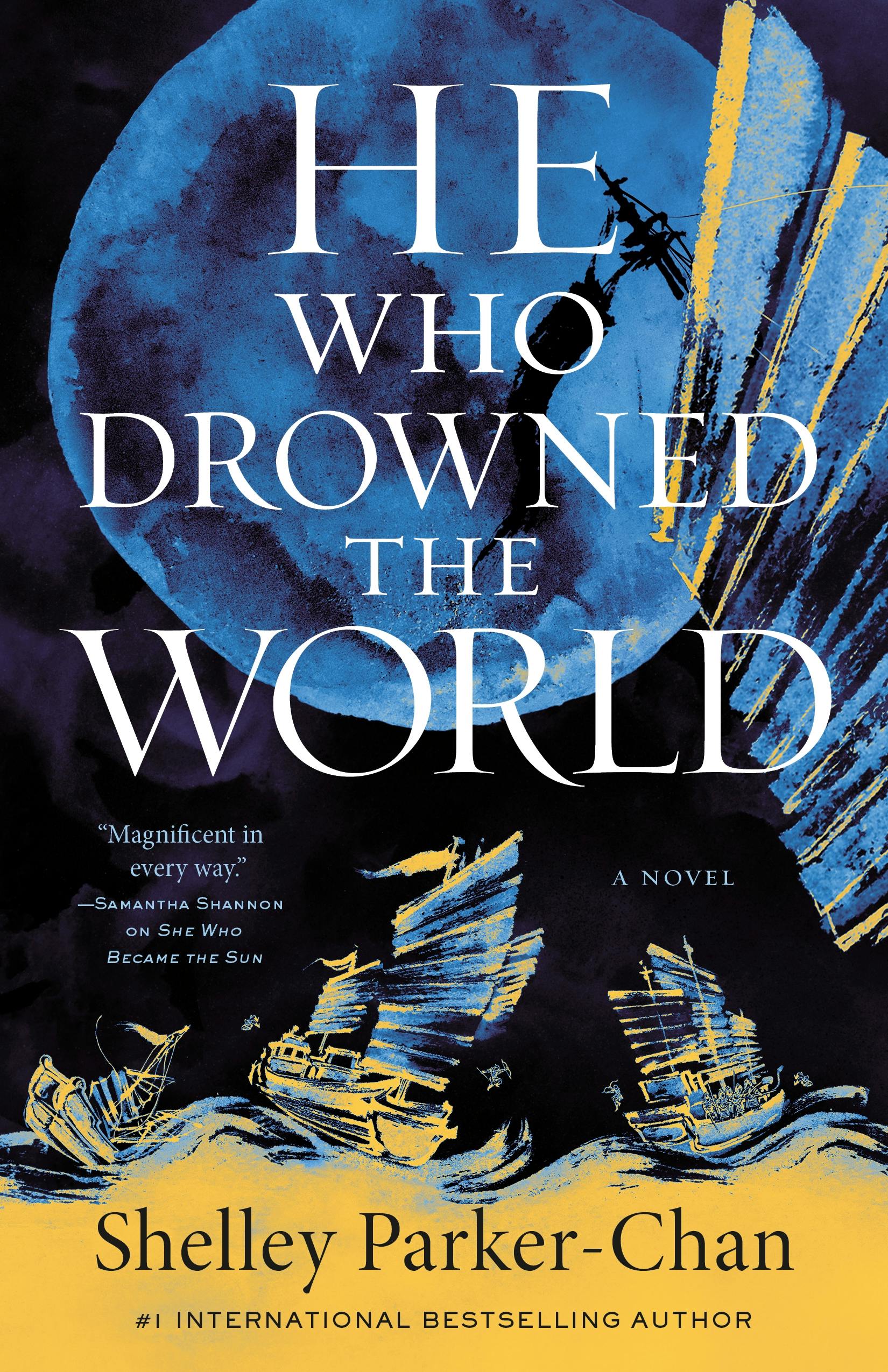
Book Review: He Who Drowned the World by Shelley-Parker Chan

Wednesday, August 23, 2023


½

Thank you to NetGalley and Tor for allowing me to read this ARC!

Content Warning: violence, death, misogyny, rape, sexual assault, child abuse, homophobia, transphobia, torture, self harm.


Zhu Yuanzhang is so close to being on top of the world. After her shocking victory with her peasant uprising, Zhu has implemented herself as the Radiant King, and doesn't plan to stop there. Her old enemies, however, have not forgotten her -- and after her rise to power, she's created many new ones in the process, too. One of them is Madame Zhang, the former courtesan who is just as willing to claw her way up the ladder as Zhu is, and she's quickly becoming Zhu's most daunting opponent. In the hopes of overcoming Madame Zhang and making her way to Dadu, where she can seize the throne for herself, Zhu is forced to ally herself with General Ouyang, the very man who was once her fiercest competitor. But unbeknownst to any of these contenders, Wang Baoxiang -- Esen-Temur's scorned and ridiculed scholar brother -- has made his way back to the capital and, with his calculating maneuvers, may just bring the entire empire to its knees.

There are no words in the English language that could accurately describe how excited I have been for the sequel to She Who Became the Sun. It easily became one of my top books of the year, and it will forever remain inscribed in my mind and heart. Parker-Chan has created a world populated with characters who are truly morally gray, and they're never afraid to allow those characters to venture onto the path of darkness and destruction, which is explored much more in depth this time around. Although Zhu remains our protagonist, there's a much heavier focus on Baoxiang, the new Prince of Henan, who is -- much like my beloved General Ouyang -- exclusively fixated on vengeance.

Let's start by talking about the arc of my two favorite characters, Zhu and Ouyang. Zhu remains her usual indomitable self, following her ambitions selfishly and ruthlessly. Ouyang has, obviously, taken quite a few knocks, and it's evident in his character, even more so than before. However, I had the sinking feeling as I read this novel that, somehow, Zhu has taken more of backseat than before. That isn't to say that she doesn't get plenty of chapters, or that her arc is not completed, but to me, it seemed as if Parker-Chan was so enjoying Baoxiang's character and his chapters that they sort of put everyone else on the backburner. While I like Baoxiang well enough, and he's very interesting, the nucleus of everything being on him was a bit disappointing for me. Some of my problems with him arise later in the book, and truthfully, I can't discuss those issues without spoiling the ending of He Who Drowned the World. But, I think it'll have to do to say that while the novel seems intent on having us sympathize with him, I found that extremely difficult to do as the plot progressed.

Zhu is and always will be the shining star of the duology, and I greatly enjoyed seeing her growth -- this time around, she actually begins to experience emotions that she hasn't quite encountered before -- and it's just easy to root for her. Her decisions are, more often than not, painful in their mercenariness, and although she makes some choices towards the conclusion that were a bit hard for me to understand (or agree with), she is never not interesting, never the kind of character you wish was off the page. In fact, once again I must applaud Parker-Chan's fearlessness in making Zhu greedy, ruthless, and yet still somehow tender with those she loves. Zhu and Ouyang are posited as mirror images and, while this is undeniably true, He Who Drowned the World makes it more apparent than ever that Ouyang is an example of the path that Zhu could one day find herself on. Ma Xiuying, one of my other favorites, has an extremely complicated arc this time around, and one that I'm still not sure how to feel about.

One of the few flaws in She Who Became the Sun (if you can call it a flaw; it really is just my opinion) is how it underutilizes Ma during much of the book. She gleams constantly with potential, and while Ouyang, Baoxiang, and Zhu are, in many ways, twisted versions of one another, she stands out as being singular. In comparison to all of our main players, she retains a compassion and gentleness that serves to make her simultaneously stronger and more vulnerable to the game. Yet she has a very tiny bit part in this novel, up until the last act, and I can't help but feeling slightly -- I'm not even sure what the correct word would be. Put off, maybe. Maybe one day I'll be able to fully put into words how I feel about Ma's arc, but today isn't that day. All I can say for now is that it was not what I expected nor hoped to see for such an interesting character.

Parker-Chan's writing is gorgeous. This has stayed consistent throughout their books, and most likely will always be a feature of whatever they choose to write. The way they use language is with true craftmanship, and honestly, I'm quite envious of the absolutely stunning sentences they come up with. Just beautiful, and makes the reading fun and flow so well, regardless of the difficult topics being addressed.

And with the mention of difficult topics, there is something else I'd like to touch on. He Who Drowned the World very heavily features rape, sexual assault, and misogyny. Now, these elements are, of course, present within the first book as well, but here they've certainly been dialed up a few notches. We actually get a few on-page rape scenes, and while I don't have any qualms with reading or writing about dark, hard things (and I understand why some authors choose to include such scenes), at some point these things started to feel almost... gratuitous. I hate saying that, as I know that is not Parker-Chan's intention whatsoever, but there were some I particularly took issue with. This time around, it feels almost as if every single female character is being "brought down" or "degraded" by a depiction of rape or sexual assault. Again, I really can't get into it in detail without spoiling many of the big plot points, but it's something I felt remiss not to mention at all, especially since it was something weighing heavily on my mind as I read. The scenes themselves are not extremely graphic, and obviously they're not written to be titillating, but some of them verged on the border of being just too much. Despite Parker-Chan saying that they don't write "grimdark fantasy," this sometimes felt like just that. For me, it's simply an issue of wondering why we have to see all of them on-page. I think some of them could have taken course in the beginning or aftermath without taking anything away from what's going on.

In conclusion, I liked but did not love this book. This ended up being a slightly disappointing end to the duology for me, and while it contained many things I did love, in the end the issues I grappled with throughout my reading kept me from adoring it as a whole. With that being said, I do want to say I love Parker-Chan's writing and characters, and I really can't wait to see what else they come up with. I'll definitely be reading whatever they write next.

Book Review: Under the Tamarind Tree by Nigar Alam

Sunday, August 13, 2023


½

Thank you to NetGalley and Putnam for allowing me to read this ARC!

Content Warning: violence, death, misogyny, sexual assault, colonization. 

In 2019, Rozeena is haunted by memories of her past. Out of her three childhood friends -- Haaris, Aalya, and Zohair -- she is the only one who still lives in Karachi, the place her parents fled during the Partition of India in 1947. Although she's done her best to put the events of 1964 behind her, she still fears her only son discovering the truth of his background, and so it suits her just fine to stay away from everyone in her old life. But when Haaris calls her all the way from America, pleading for her to take his granddaughter under her wing, Rozeena is thrown back into the midst of a time she doesn't want to remember -- and its consequences that are still echoing to the present day. 

Before Under the Tamarind Tree, I had only the vaguest understanding of India's Partition in 1947. It was a catastrophic event, engineered by British colonizers who were both too ignorant and too cruel to care for the millions of people under their watch, culminating in violence, confusion and, ultimately, the loss of between 200,000 to two million lives, and the displacement of nearly twenty million. Alam does a great job of weaving the events of 1947, 1964, and 2019 together, and although the primary focus of the novel is on Rozeena and her friends, the backdrop of the Partition and its trauma is ever-present, the catalyst that leads to many future tragedies -- some of which Rozeena, Haaris, Zohair and Aalya will never recover from.

The setting of Karachi is beautifully rendered, and despite the fact that I've never even set foot out of Texas, Alam's descriptions of it are so real that I could almost imagine myself there. She takes time and consideration to perfect the background, and Karachi itself almost becomes a character, a sort of living, breathing being that is utilized by the story and characters. Even if you have very little prior understanding of Pakistan, its culture, religions, or its history, Alam does an excellent job of providing us with just enough information that it doesn't feel as if you're being spoon-fed exposition. 

Our main character is Rozeena; the book is entirely from her perspective, the other characters creating a sort of web around her, with her squarely in the middle of it all. In spite of Rozeena's narration and the many problems that she faces, however, she remains distant, and it was sometimes difficult to connect with her. It might be in part due to the rather simplistic writing style, particularly in the modern day, which is told through present-tense -- never a great vehicle for conveying emotion, if you ask me. I particularly liked the relationship between Aalya and Rozeena, and their efforts at reconnecting as they grow from children into young adults, and I would've actually liked to see more of it.

Under the Tamarind Tree is an exploration of regret. Rozeena is constantly plagued by guilt from her past, unable to let go of the mistakes she made that changed the directions of their lives forever. The brightest spot of the book is the blossoming relationship between Rozeena and Haaris's granddaughter, who offers her a way out of self-loathing and depression. She sees in this girl a chance at making things right, of healing the wounds that she and Aalya experienced as young women, and it is this beautiful bond that centers the story and, in the end, makes it feel complete. 

Book Review: Mrs. S by K. Patrick

Friday, July 14, 2023


Thank you to NetGalley and Europa Editions for allowing me to read this ARC!

Content Warning: violence, misogyny, homophobia.

At a remote English boarding school, where propriety is an enforced rule, a new woman has taken up the role of "Matron" -- and most importantly, she's a butch lesbian. Used to being an outsider looking in, but slightly taken aback by the way her appearance and "strangeness" is greeted by hostility, she grows restless in her role, concerned about her future, and extremely self-conscious. But then, she meets Mrs. S, the headmaster's wife. Mrs. S is everything the Matron is not: comfortable in her dominance and authority, and very feminine. Captivated by Mrs. S, the Matron quickly finds herself falling into an infatuation, one that will deeply change the lives of everyone around them.

Although it has taken me far, far too long to put up this review, please don't take it as a sign that I disliked this book. In fact, I think it's one of the most beautiful, arresting novels I've had the pleasure of reading this year, and there's quite a lot of stiff competition (like Lucky Red, for example, another ARC I just reviewed). Patrick's writing style is totally and completely unique: none of the characters are ever named, aside from the dauntingly gorgeous and commanding Mrs. S, and although at first you might struggle to get into the flow of Patrick's style, please do yourself a favor and do not put this down.

This is a perfect representation of being "other." The Matron, our main character and narrator, has struggled with this throughout her life, connected always to her lesbianism and butch appearance. Her relationship with her parents is extremely fraught; she comes to the English countryside, and expects her loneliness to be even more solidified, but is surprised to find that she isn't the only lesbian there. This also makes a great example of the saying "we are everywhere" -- that no matter where you go, or what people you meet, you will always find another person who is on the LGBT spectrum. For me, Patrick flawlessly and easily captures what it is like to be an outsider, especially as a woman. The sensation that you don't fit in, that all the other girls are connected somehow, and that you will forever be standing just outside of their circle.

The Matron's relationship with Mrs. S is the primary focus, but there are so many elements at play here, and Patrick handles it masterfully. The ruminations on identity are spot-on, and all of it feels like lived, authentic experience (and I assume much of it is). As their relationship develops, you feel just as the Matron does, confused and baffle and in love and wondering what kind of game Mrs. S is playing -- or if it's even a game at all.

Highly, highly recommended!

Book Review: The Brightest Star by Gail Tsukiyama

Sunday, June 25, 2023


Thank you to NetGalley and HarperVia for allowing me to read this ARC!

Content Warning: death, racism, homophobia, misogyny, outdated racial terms (used by those of that race), racial slurs (specifically anti-Asian and Chinese racial slurs), relationships between an adult/minor.


Growing up, Wong Liu Tsong falls in love with silent films, running home to mimic the expressions of the actresses she sees on screen. Taunted at school for her Chinese heritage, she dreams of becoming a star, picking out her own stage name as a child: Anna May Wong. While her sister Lulu is obedient, helping their parents faithfully at their laundry, Anna is a rebel, drawing the ire of their father. But when all of her hard work pays off and Anna gets an opportunity as an extra in The Red Lantern, she's hooked for life -- and there's no one who can stop her. Pitted against white actresses in yellowface, predatory film executives, and an American audience that wants their Chinese heroines either unsympathetic villainesses or good girls who always die, Anna rises in the industry nonetheless, and leaves a lasting impact that will change the lives of many Chinese and Chinese-American women for generations.

Anna May Wong has captured the imaginations -- and hearts -- of people ever since she debuted in 1919. A trailblazer by every definition of the word, she's someone who fought time and time again against discrimination and oppression, and although we now look back on her as a woman who was successful, she often felt the stinging blow of being denied role after role, only to have it taken by a white woman in dreadful, monstrous yellowface. Tsukiyama makes an effort here to peel back the layers, to allow us to see the film icon from her own perspective, and to also help us understand the setbacks she faced and overcame each time. 

As a fan of Wong's, it was a thrill to see this book available on Netgalley. The cover, with its beautiful photograph of her with the haircut that inspired so many others to chop their bangs, caught my attention instantly. Reading the first page of The Brighest Star, however, I'm afraid to say that I felt the first, slightest hints of apprehension. This is my first time reading a novel by Tsukiyama, but she's famous and well-regarded, so I wasn't very concerned that I would dislike her writing. With that being said, as difficult as it is to say this, I'm not a fan of Tsukiyama's writing in the slightest. My main problem is partly due to writing style, which is all tell, no show, and partly due to pacing, which takes you so quickly through every part of Wong's life that it feels as if you get no time to absorb it whatsoever.

This is one of my biggest disappointments of 2023. It's hard to emphasize how much the pacing damages this story; it feels almost like flashes of her mind and thoughts and then, in the blink of an eye, it's gone. To put it simply, everything is flat, particularly Wong's inner monologue. There's absolutely no personality, and it's extremely off-putting, especially when you consider what an interesting and brave person Wong was. One other problem: the depiction of her relationship with Marlene Dietrich. Many people are aware of their relationship, but while Tsukiyama gives much dedication to the relationships Wong had with older, predatory men (including those when she was underage), and gives much detail to their "love and passion," Marlene is many times called nothing more than a friend. Very strange.

So, with all of that being said, I couldn't in good conscience give The Brightest Star a rating higher than two stars.

Book Review: Lucky Red by Claudia Cravens


Thank you to NetGalley and Random House for allowing me to read this ARC!

Content Warning: violence, death, homophobia, misogyny.


Bridget is only sixteen when she arrives in Dodge City, a newly-made orphan with nothing to her name but her bright red hair and boldness. It doesn't take long before she's approached by one of the Buffalo Queen's madams, who thinks that Bridget will earn them a pretty penny with her fresh-faced prettiness. As Bridget learns the trade and lives at the brothel, for the first time she finds herself with money and security, and the friendship of other women. But Bridget's relatively peaceful life will change forever when a female gunslinger and bounty hunter, Spartan Lee, rides into town -- and makes quick work of stealing Bridget's heart. Deeply in love and quickly garnering a reputation as a troublemaker, Bridget's lucky streak is running out, and she won't be the only one facing the consequences in the end. 

The word 'cinematic' is used in the blurb for this book, and there's truly no better descriptor for it than that. This is a Western, but one that doesn't simply include women and LGBTQ representation: it centers them totally. It's got all the grittiness and hardness of Tombstone, but also a profound sense of family and connection -- and all the conflicts that come with it.

Our heroine is Bridget. She's known nothing but hardship for the entirety of her sixteen years, and so to her, the Buffalo Queen represents comfort, prosperity, and, again, family. Her two madams take her under their wing, but it's her relationship with Constance, a fellow sex worker, that really ends up helping her to define her life. Bridget is exactly what you look for in a main character: she's tough and bold, but she's also prone to making mistakes and getting herself into situations that aren't easily remedied. What particularly sealed my love for her is the fact that Cravens never shies away from making her sometimes difficult, or petty, or selfish. It makes her instantly human, relatable, someone that you end up rooting for because she is complex and three-dimensional. 

Bridget's lesbianism is also a central theme throughout. It's a major part of how she ends up getting herself into so much mischief and trouble, and it was a joy to read about her discovering herself, unable to hide her thoughts or love on her face and all of the other girls being aware that she was head over heels. Lucky Red is primarily a journey of self-discovery, not only with regards to Bridget's sexuality, but also with her trying to figure out exactly what she wants and what she's willing to risk to get it. Also, despite the fact that there is homophobia at play in Lucky Red, it was a relief to have it juxtaposed by the accepting nature of others in Bridget's life. However 'historically accurate' it may be, it gets tiresome to read the same stories again and again, focusing only on the painful parts of being LGBTQ+.

To put it simply, this is a book I will be recommending to everyone. It's sharp, clever, gritty, and an absolutely fantastic homage to classic Westerns. This one deserves its five stars and then some, folks.

Book Review: Maddalena and the Dark by Julia Fine

Wednesday, June 21, 2023


½

Thank you to NetGalley and Flatiron Books for allowing me to read this ARC!

Content Warning: violence, death.

Maddalena and Luisa are opposites: Maddalena from a wealthy, patrician family, Luisa a foundling, forever indebted to the Ospedale della Pietà, the convent school that has taken her in and taught her music. When Maddalena's fortunes change -- due to the questions surrounding her parentage, and her mother who has apparently run off with a lover -- her brothers and father decide to send her off to the Pietà, too, hoping to make her into a respectable young woman who will be married off to an equally respectable young man. When Luisa and Maddalena meet, they feel an immediate connection, beyond anything either of them has ever experienced before. But Maddalena has dangerous plans to secure her own future, and as she draws Luisa deeper into her world, both girls learn that everything comes with a price.

Starting off truthfully, I have very conflicted feelings about this book. The first few pages were captivating, filled by beautiful, flowery writing, but it quickly became a double edged-sword. Having never read anything by Fine before, I didn't know what to expect, but any book set in eighteenth century Venice, featuring a romance between two women, is enough to entice me into requesting the ARC. However, as I went through the novel, I found myself never quite able to fully invest myself in the story, particularly when it came to Luisa's character.

The setting is rich with potential, and our opening, with the bold and slightly calculating Maddalena, certainly caught my interest. Maddalena is like many female characters who end up being my favorites: not quite likable, in a way that actually increases one's interest and enjoyment of her. Luisa, on the other hand, seems all right upon our first meeting with her, but as time went on, I grew increasingly irritated and frustrated with her naïveté and her inability to take any initiative whatsoever. Although Maddalena is manipulative and borders on being unkind, she's fascinating, layered and her motivations change and shift throughout. Strangely enough, it was Luisa who stuck me as being slightly false, and because of this, not very likable.

Perhaps it's partly my fault, but I also wasn't aware that the storyline heavily features magical realism, and that a large part of it includes rather abstract and surrealistic scenes. I'm not against those things by any mean, but I felt that to some degree, it was used to orchestrate and engineer the plotline to the author's liking. Not quite a deus ex machina, but something very like it, which for me, doesn't work. One more thing I'm awfully sore about: the relationship between Luisa and Maddalena. This is categorized as LGBT, and in some ways it is (Maddalena is very obviously a lesbian), but if you're hoping for a complex relationship between Luisa and Maddalena, I'm afraid you'll be very disappointed indeed. Look, I'm a huge fan of toxic, slightly cruel relationships between women (a la Villanelle and Eve, or Frances and Lilian in The Paying Guests), but this flops between being one-sided and maybe? Possibly? Something else. It's confusing, but not in a rewarding way.

Now, for the positives: Again, Maddalena's character is one that has stuck with me for a while, even after completing this book months ago. Fine's writing is really, genuinely beautiful, and I think there was so much potential here, but unfortunately it just ended up falling flat. By no means is this an awful book, but instead, sadly a bit mediocre. 

 
FREE BLOGGER TEMPLATE BY DESIGNER BLOGS