Pages

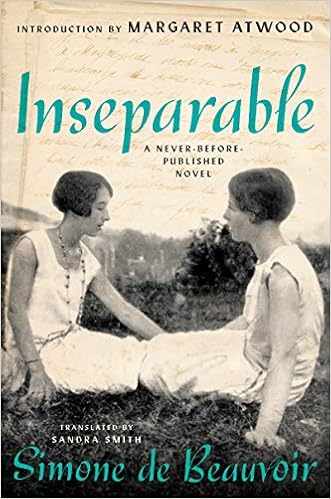
Book Review: Inseparable by Simone de Beauvoir

Monday, September 6, 2021


½

Thank you to NetGalley and Ecco for allowing me to read this ARC!


Content Warning: misogyny, death, parental abuse (emotional and verbal).


Written in 1954, but never before published, this short book details the intense and lasting friendship between two young girls, Sylvie and Andrée. Based off of de Beauvoir's own relationship with the fascinating, melancholy Zaza Lacoin, and exploring existentialism, religion and the restrictive lives women were expected to lead, this novel deepens our understanding of the first transformative love that shaped many of de Beauvoir's beliefs and even her future as one of France's most recognized feminist voices.

The novel starts in a classroom: Sylvie, a dedicated and studious pupil, is surprised when another little girl she's never met before takes the seat beside her. This is Andrée, one of the daughters of a large, well-respected family, who immediately captures Sylvie's attention with her sparkling and irreverent personality. It's this relationship that will change the course of Sylvie's life forever, and in this simple exchange between the two girls, we see already the blossoming of feelings deeper than friendship on Sylvie's part.

The prose is beautiful, both moving and full of simplistic descriptions that insert you directly into the scenes, and the interactions between the two women are fraught with love and tension that extends deeply beneath the surface. Although Andrée's emotions towards her companion are not quite so intense, it doesn't take away at all from the sweet, tender -- and often selfless -- love that Sylvie develops and nurtures for her friend. De Beauvoir also perfectly renders that sensation we sometimes have with our friends, lovers and those we cherish: do I truly understand you? And what does it mean to be understood by someone, in every sense of the word?

I must also mention the deep and profound discussion that takes place regarding religion, both in Sylvie's own inner monologues and in dialogue between the characters. As someone who was raised in the Christian faith (but nowhere near as intensely as Andrée or even Sylvie) many of the questions posed here resonated with me. Can we fathom God's will? Does God want us to be obedient in all ways and in everything, including in ways that smother or harm our spirit? Sylvie (and by extension, Simone herself) loses faith early on; Andrée remains a devoutly, fervently religious Catholic; but in spite of these differences, it makes no difference to their friendship, which is full of the kind of pure love that cannot be destroyed even by such a divide. 

It's the constraints and pressures of a life of perfect goodness, as well as the expectation of perfect womanhood, that ultimately leads to the tragedies that later befall Andrée and Sylvie. Andrée's mother, who she adores completely, is oftentimes the enemy who cuts her down and tries to force her into a mold that has previously destroyed her own life. There we see again the cycle of motherhood and the sharing and passing down of their trauma and grief onto their daughters, a cycle that still to this day continues to ensnare women. It's hard to fully discuss and relate in a review all the feelings and philosophies at play here. Only by reading this work can you feel and understand its profoundness.

Now, before I go onto recommend this book, I feel there's one more thing I must address. As someone who is aware of de Beauvoir's morally and ethically repugnant relationships with young women in her later life, I can't review this without making mention of it. These women (many whom were underage, and were pupils she taught at school) were exploited and taken advantage of both by de Beauvoir, and by her partner, Sartre, who she often introduced them to.

While this work personally was something I found moving, beautiful, and complex, I must say that my rating is based only on that fact. While de Beauvoir's prolific work changed the face and understanding of feminism and women's rights forever, I would be especially remiss not to bring it up while reviewing a book that deals directly with those topics as well as with her sexuality and relationships with women. I think it would have been more honest and forthcoming if these things had been mentioned in Atwood's foreword or in de Beauvoir's daughter's afterword. Going forward, we must acknowledge these things that de Beauvoir did, if only so that we may do justice to the young women (and girls) who became her victims. 

Book Review: Summer Sons by Lee Mandelo

Sunday, September 5, 2021


Thank you to NetGalley and Macmillan-Tor & Forge for allowing me to read this ARC!


Content Warning: violence, murder, death, suicide, gore, recreational use of drugs and alcohol, homophobia (including slurs), racism, misogyny, cancer, animal death, child abuse, body horror.


Andrew and Eddie have been best friends -- and sometimes, perhaps, more -- since a traumatic childhood bonded them together. While Eddie is off attending Vanderbilt, he's left behind Andrew, promising to bring him to their to-be-shared house where they'll both go to college and, presumably, spend all of their time together as usual. Something horrible happens, though. Eddie commits suicide, leaving behind a huge inheritance for Andrew, one that doesn't just include his family's old plantation house and a car, but also a frighteningly powerful haunting. Desperate to find out if Eddie really left him behind, Andrew begins to discover secrets that leave him wondering just how well he truly know the man he believed to be his twin flame and other half. 

I struggled writing the summary for this one, as there's so much to it that so few words doesn't do it justice. Although this story is primarily about Andrew and Eddie, who share a fraught background and a sort of dark magic, it's also a rumination on the traditions of Southern Gothics and the occult. When I saw so many people comparing this to The Raven Boys, more specifically mentioning that the characters and relationships are reminiscent of my favorite of the boys, Ronan Lynch, I was thrilled to give this a try. For me, this novel was a full, even three stars, but I was slightly disappointed because I'd expected it to be something I would automatically click with.

Mandelo's writing is beautiful; there's no other descriptor that fully and simply explains the stylistic writing and lovely vocabulary at use here. However, in spite of this, I sometimes found it hard to connect with any of the characters. It was almost as if the prose came first, and somehow, its sleekness left me feeling a bit distanced from what was actually happening. The first 50% to 60% of this book was intriguing, but something of a slog, making it hard for me to want to pick it back up once I'd put it down. I don't mind slow-burns, but in this case, the pacing was off for me, and that had a big impact on how much I enjoyed the reading process.

Talking about the characterization, I have to say flat-out that I didn't like Andrew. Even his intense suffering over Eddie's death (and his secrets) didn't conjure up much sympathy for me. I understood that Mandelo was trying to show us just how caught up in each other Andrew and Eddie were -- to the point of outright ignoring and hurting others -- but it was hard for me to empathize with a man who blatantly uses and behaves cruelly to those in his life who love him. One of the characters (who takes a very minor role), Del, is a perfect example of Andrew's disregard for others: she obviously cares for him, and makes an effort to both be in his life and try to offer him advice and healing, but Andrew treats her so badly it honestly made me angry. There's also some casual remarks that Andrew makes in his narration that were misogynistic and, frankly, both frustrating and boring to read.

The worse part of it all is that the last portion of the book is actually unflinchingly painful and wonderfully realized. I began to like Andrew, and to understand him; the relationships he built with the other friends Eddie had left behind were touching and authentic; his coming to terms with his sexuality was sweet and frightening and real. The haunting, too, becomes more tangible; the end "twist" was not surprising nor original, but in combination with all of those other things, it was more than enough to make up for that small detail. The exploration of toxic masculinity was interesting enough, but it was the discussion of racism and the South's legacy that set this apart from other Southern Gothics. The haunted land, tormented by a past (and present) of racism and the pain and suffering of slavery, was well-done, although I think that aspect could've taken a larger and more important role. 

So, an imperfect novel, yes, but with Mandelo's talent, I would be happy to read what they have to offer next. Some things in this book didn't work for me, but for a large part of people interested in this, I think they'll love it. If you like slow-burn Southern Gothics that touch on the South's bloody history, explore the pitfalls and beautiful things about discovering who you are, and how grief can control us, I'd recommend you pick this one up. 

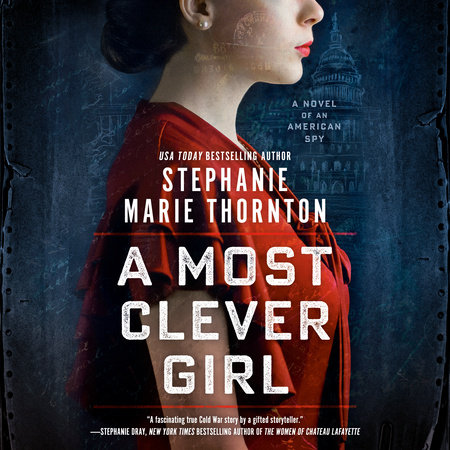
Book Review: A Most Clever Girl by Stephanie Marie Thornton

Thursday, August 26, 2021


Thank you to NetGalley and Berkley for allowing me to read this ARC!

Content Warning: murder, violence, death, suicide, cancer, animal death, sexual harassment, abortion, misogyny, alcoholism.


It's 1963. Cat Gray has had a double shock: the death of her mother, and the assassination of President Kennedy. Running off adrenaline and rage after reading the letter her mother left for her, she hunts down Elizabeth Bentley, notorious Communist spy queen turned FBI informant, with the intent to kill. But as Cat becomes captivated by Elizabeth's story of a life full of risks and an attempt to do something meaningful, she slowly starts to wonder if Elizabeth is really the villain she's been painted as, or if there's more beneath this woman's powerful façade -- and what it means for the mystery of Cat's own background...

As I'm sure you can tell by books previously reviewed here, I have a penchant for Russia and the history of Communism. When I saw this book, and realized that it was actually a fictionalized tale of the real-life Elizabeth Bentley, I knew it'd be on my list. From page one I was drawn in by this story, not only because of Thornton's vivid and powerful writing, but also because of her portrayal of a woman who has been pilloried by history.

It's easy to sympathize with Elizabeth, perhaps not only in spite of her mistakes, but because of them. She is far from perfect, a quasi-traitor to her country who often acts selfishly, but she's also dangerously clever and determined to try and remedy the pain she has caused throughout her life. I loved the deep, dark parts of her, as well as the caustic and biting humor she employs throughout the telling of her story. Thornton succeeded in making Elizabeth relatable, even lovable, but doesn't sugarcoat the sometimes damning truth.

The relationships that Elizabeth forms during her life as a spy were a highlight of the book for me, particularly when it comes to the wonderfully sweet and fascinating dynamic she forms with her handler, whom she falls head over heels for. I rooted for Elizabeth, and I also enjoyed the weaving of Cat's story in with the rest of the narrative. It isn't often that I say this, but there's really nothing I would change about this amazing, thrilling novel!

Highly recommended. 

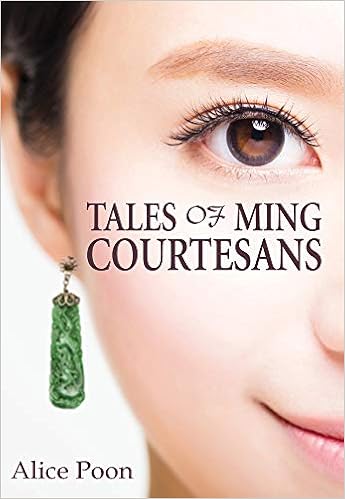
Book Review: Tales of Ming Courtesans by Alice Poon

Friday, August 20, 2021


½

Content Warning: violence, death (including that of a child), prostitution, murder, suicide, rape, sexual assault, abuse (physical, sexual, verbal and emotional).


Liu Rushi, Chen Yuanyuan, and Li Xiangjun were three of the renowned Eight Beauties of Qinhuai. Each coming from a background of hardship, all three sold to "thin horse breeders," a colloquial name for people who ran the slave and concubine market, these three women ended up having extraordinary lives -- sometimes at the cost of their own happiness and love. Known for their artistic talents, intelligence, and striking beauty, as well as their political knowledge and their challenging of societal norms, this novel follows their lives through friendship, love, tragedy, death and the end of the Ming Empire.

I previously read another of Alice Poon's novels, The Green Phoenix. I gave that one four stars, and although the writing style wasn't my favorite, I enjoyed it wholeheartedly. This one, unfortunately, didn't quite meet the mark for me. While I admire Poon's dedication to history and accurate details, and all three main characters were sympathetic and likable, it ultimately left me feeling as if I were being told everything rather than experiencing it. There is some context to this type of storytelling, as it is Rushi's daughter who is reading her memoir and also being told their stories by relatives, but the downside to this is that it becomes difficult to be immersed. 

To be fair, I have been in a bit of a reading slump, and I've struggled to read anything that truly captures my imagination these last couple of weeks. There were many things I enjoyed and liked about this book, like the previously mentioned dedication to accurate historical details, but the writing once again left me a bit cold -- as well as the fact that much of the language used feels too modern, and sometimes forces you out of the story. It felt especially strange in conjunction with the otherwise wonderfully rendered historical settings and details. 

That being said, I wouldn't not recommend this book, and I think if you are interested in the lives of these three very fascinating women, it's worth a read. As someone who has a deep interest in Chinese history, culture, and literature, it was still an enjoyable read and I'm glad I learned some new things!

Book Review: Tomie by Junji Ito

Friday, August 6, 2021


Content Warning: murder, violence, death, domestic abuse (emotional, physical, verbal, and implied sexual), dismemberment, cannibalism, misogyny, body horror, gore.


Tomie Kawakami is just like any other teenager. She's interested in fashion, expensive jewelry, and good food. Well, aside from the fact that she can tempt men into doing anything (and I do mean anything), and that she is an immortal seductress who can never die. Tomie goes about her many lives, leaving destruction and suffering in her path, and it isn't long before those who encounter her realize that there's no escape...

How excited I was to find this deluxe edition! It includes every Tomie story, from her beginnings as a wronged-against schoolgirl, to terrorizing a male fashion model who has it all, and many more in between. Tomie is one of those figures that has a large cult following, perhaps because of her sheer evil in combination with her startling beauty. She is the quintessential female monster. 

I was surprised that many of the starred reviews for this were on the lower side. I must admit I've never had the pleasure of reading Ito's Uzumaki or Gyo (those will definitely be next on my list!), which I saw many people citing as better and a more accurate representation of Ito's genius, but I personally found Tomie to be right up my alley -- a metaphorical tale of the dangers of beauty standards, embodied by the femme fatale herself. It's both horrifying (sometimes even disgusting in its horrors, although I mean this in the best way) and wonderfully crafted.

And Tomie is a perfect manifestation of the frightening beauty standards that women feel the need to force themselves into. It doesn't matter if we must suffer to do so -- after all, isn't to be beautiful to suffer? They are ever-evolving, much like Tomie, and no matter how hard we try to refuse them or change them, they continue to plague us and drag us down. 

If you love horror, I highly recommend this amazing collection! It was enjoyable enough that it took me about six days to read it, and it clocks in at around 750 pages. Ito is, indeed, the master of horror with meaning and a beating heart beneath it. 

Book Review: Midnight Robber by Nalo Hopkinson

Thursday, August 5, 2021


½


Content Warning: death, rape, incest, abortion, violence, child abuse, spousal abuse, pedophilia, alcoholism, animal death, forced pregnancy. Please be aware that this book deals with extremely heavy topics, many of them graphic in text.


Tan-Tan lives on Toussaint. Her father is the mayor of their county, and so she lives a relatively comfortable life, in spite of the way her beautiful, spirited mother neglects her. But suddenly Tan-Tan's world is turned upside down when her father commits a crime that forces him to be exiled to the brutal planet of New Half-Way Tree, Toussaint's shadow-side, a place where dangerous creatures from folklore abound. Taking Tan-Tan with him, she soon discovers that her father is no longer the kind man who adores her. As she grows up, Tan-Tan will become the Robber Queen, feared and revered by those who tell stories of her...and hopefully, in the process, save herself from the painful trauma of her childhood.

There's something truly magical about the worlds that Hopkinson creates. In this case, it's a mixture of folklore, fantasy and science-fiction, a blend of different Caribbean cultures narrated in Creole. Our main character, Tan-Tan, is like all of Hopkinson's heroines -- powerful, complex, and totally and authentically human. Plagued by the horrors of her childhood, and trying desperately to escape from her past, this book is a riveting look into the life of woman forced to carry her abuser's baggage. 

Hopkinson's prose is both beautiful and horrifying, graphically relating to us the events that are taking place in Tan-Tan's life. Interspersed with snatches of folk tales about Tan-Tan, each of them make it clear that she is suffering under the weight of her guilt. From the moment the first traumatic incident occurs, Tan-Tan, like so many others who experience deep and lasting trauma, finds herself splitting into two: the "bad" Tan-Tan, who whispers self-hatred into her ear, and the "good" Tan-Tan, who remains loyal to her abuser in spite of his cruelty.

It's mostly the pacing that brought this down to three and a half stars. Still a good rating, mind you, and I enjoyed this book greatly; but it was prone to lingering, and it was a good while before I felt that the story truly began. To be fair, there was a lot of explaining needed, due to the sci-fi and fantasy elements, but I was both confused and a little bored in the beginning. However, once the plot picks up, things move very fast, and get interesting very quickly. I must mention the depth that went into this book, particularly the fascinating culture of the Douens, a species that lives on the planet. The worldbuilding could never be called shallow or superficial. 

This is by no means an easy read, and if the abovementioned triggers are things that you personally are affected by, I would not recommend picking this one up. It's beautiful and has an ending that will bring you tears (of both joy and pure relief), but the journey there is painful and incredibly dark. That aside, however, I would highly recommend this to those who love sci-fi, especially the kind that is diverse and has an amazingly written black woman protagonist! 

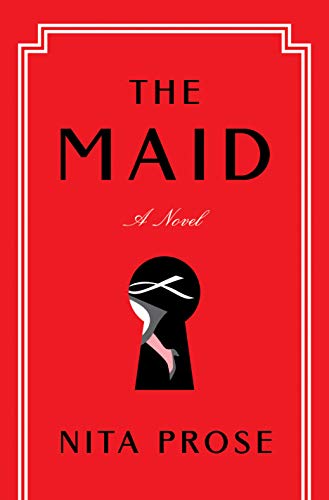
Book Review: The Maid by Nita Prose

Sunday, August 1, 2021


½

Thank you to NetGalley and Ballantine for allowing me to read this ARC!


Content Warning: death, violence, bullying, racism, drug abuse, domestic abuse (physical, verbal and emotional), suffocation, stigma against neurodiversity, non-graphic torture.


Molly Gray is a maid. She adores her job at the luxurious Regency Grand Hotel, perfecting people's suites and taking pride in her ability to clean up any mess. Well, not any mess, as she soon discovers. Not a mess that includes the death of one of the hotel's wealthiest patrons, Charles Black, and Molly smack in the middle of the whole fiasco. Now, with the police suspecting her simply because she reacts a bit differently than most, she finds herself plunged into a disaster spinning out of control. Through her own cleverness (and with a bit of help), will Molly be able to expose the real killer before there's no getting out of her predicament?

I'm sure you have heard of Nita Prose's debut. Already a major success before it has even hit shelves (and soon to be made into a feature film), I was pleasantly surprised to find that the majority of reviews were in the four-to-five star range. I assumed I would love it, not only because I love thrillers, but also because I have a special place in my heart for eccentric, sometimes unlikable characters.

The problem is, Molly's eccentricity is a clear attempt at portraying a neurodivergent woman, without ever giving it a name. It's rather obviously intended for Molly to fall somewhere on the autism spectrum, but she also seems to have (stereotypical) symptoms of OCD. I don't know if this is due to the author conflating these two things, or if she's aware of the fact that these two can sometimes be comorbid, but I somehow doubt it's the latter, considering how Molly's personality and traits are handled.

I won't spoil anything here, but just know that Molly is constantly used and taken advantage of, all because she sometimes struggles to read social cues, and often takes things literally. It's disheartening to read it, particularly in what is otherwise pitched as a sort of heartwarming, "cozy" type of mystery. She also has a habit of speaking as if she's in an episode of Downton Abbey, or depending on the occasion, like Sheldon from the Big Bang Theory. The singular character of color (aside from two hotel guests) is similarly stereotyped, although to go into detail would reveal a huge part of the plot. Just know that it was enough to make me pause, and wonder why exactly Prose felt it was right to go down that route.

Let's list a few of the stereotypes that Molly embodies: she's unable to read expressions; mimics sayings she's heard constantly; requires everything to be neat and clean; everything must be arranged correctly, perfectly aligned, at exact mathematical angles which she's easily able to come up with in her head; she shows little or no emotion; and she is socially awkward in pretty much everywhere. Do these characteristics truly exist in those with autism, OCD, and other similar things? Yes. But to make Molly's entire character revolve around them, to use every single stereotype, to give her very few traits outside of this, and to do it all without much subtlety or finesse...it felt both unrealistic, and borderline offensive.

Now, let's tackle why I gave it two and half stars. Without the egregious issues I listed above, I genuinely think I would have enjoyed this book. The writing was fun to read, and Prose's descriptions are beautiful and a pleasure to read. Despite the author's failings when it comes to Molly, I liked her very much and it wasn't hard to root for her. The other characters are also cute and the found family trope is utilized well here. The mystery isn't the most surprising or intriguing I've ever read, but it does its job, and it's more of a vehicle used to grow Molly's character anyway.

There were too many flashbacks, often in the middle of a scene, which would frustratingly take us out of the action, but I assume that many of these smaller issues will be dealt with once it's in its final form for publishing. Those are minor things, easily overlooked, especially when the story is compelling and enjoyable. Were it not for those other, bigger problems that left a bad taste in my mouth, this could have easily been four or five stars. Two and half stars feels fair enough to me; decent, but by no means fantastic, with its glaring errors in characterization and misuse of worn-out, tired old tropes about mental health and neurodivergency. Not to mention the ending, which felt both like a trick and a cop-out. 

To sum it up succinctly: not the book for me. Many others have loved it, but I simply can't get past the issues mentioned above. 

 
FREE BLOGGER TEMPLATE BY DESIGNER BLOGS